Last updated November 18, 2026







Free in-home design visit - walk-in showers, tub-to-shower conversions, and Kohler, Moen, and Delta fixtures planned to your exact space
How to Hire a Bathroom Remodeling Contractor in Las Vegas: A Step-by-Step Guide
Most hiring guides tell you to get three bids, check references, and make sure the contractor is insured. That advice is fine, and it misses the actual problem. In Las Vegas, the thing that sinks a bathroom project more often than bad tile work is a license that was never really checked. Nevada’s State Contractors Board logs more consumer complaints per capita than most western states, and bathroom remodels land among the most-disputed project types year after year. That’s not bad luck. It’s a market where verification is a step most homeowners skip.
This guide walks through what to actually verify, in what order, and what a contractor’s answers should sound like before you sign anything. You’ll learn how to read the Nevada license database, what separates a bathroom specialist from a general contractor, the red flags that show up in Las Vegas specifically, and the contract language that protects you. The stakes are high enough that the process deserves more than a gut check.
Quick Answer
To hire a bathroom remodeling contractor in Las Vegas, verify the contractor’s license status directly through the Nevada State Contractors Board database, confirm the license classification covers bathroom work, get a written line-item estimate with a payment schedule tied to inspection milestones, and insist on lien waivers from every subcontractor and supplier. Skip any of those steps and you’re carrying the risk yourself.
Prefer to work with a dedicated bathroom specialist rather than a general contractor? Dayspring Bath Remodeling handles free estimates and can answer licensing questions up front. Call (888) 393-8208 to schedule yours.
Styles & brands we work with
- Walk-in shower
- Tub-to-shower
- Freestanding tub
- Kohler
- Moen
- Delta
- Frameless glass
Table of Contents
- Step 1: How Do You Verify a Nevada Contractor License?
- Step 2: Specialist or General Contractor – Which Should You Hire?
- Step 3: What Red Flags Are Specific to the Las Vegas Market?
- Step 4: What Contract Language Is Non-Negotiable in Nevada?
- Step 5: How Do You Test a Contractor’s Fixture Brand Knowledge?
- Step 6: How Do Permits Work for a Las Vegas Bathroom Remodel?
- Step 7: Why Do Las Vegas Bathrooms Wear Differently?
- Step 8: What Questions Should You Ask During the Estimate?
Step 1: How Do You Verify a Nevada Contractor License?
You verify a Nevada contractor license by searching the contractor’s name or license number in the Nevada State Contractors Board (NSCB) database, then reading the status line carefully. The database is public and free. A legitimate Las Vegas contractor will give you the license number without hesitation, because they know the record backs them up.
Here’s what the status field actually means for you:
- Active – The license is current, the contractor has met bonding and insurance requirements, and you can file a complaint with the NSCB if something goes wrong. This is the only status that protects you during the project.
- Inactive – The contractor isn’t currently authorized to contract work under that license. Hiring an inactive contractor means you have no board recourse and the work may not be insurable. Walk away.
- Expired or suspended – Self-explanatory and disqualifying. No exceptions, no matter how good the references sound.
- Classification – The license lists which types of work the contractor is authorized to perform. Bathroom remodeling typically falls under residential remodeling classifications. A license that doesn’t cover the scope is not the license you need.
Nevada also requires contractors to carry workers’ compensation coverage for employees in most cases, and the database reflects whether that’s in place. Ask for a current certificate of insurance as a second check, and call the insurer to confirm the policy is live. For a bathroom project in Las Vegas, that one phone call can save you months of headache.
We’ve worked with homeowners who were quoted a beautiful price by an unlicensed operator, only to discover the deposit was gone and the work was half-finished. Checking the database takes five minutes. Do it before you hand over anything.
Step 2: Specialist or General Contractor – Which Should You Hire?
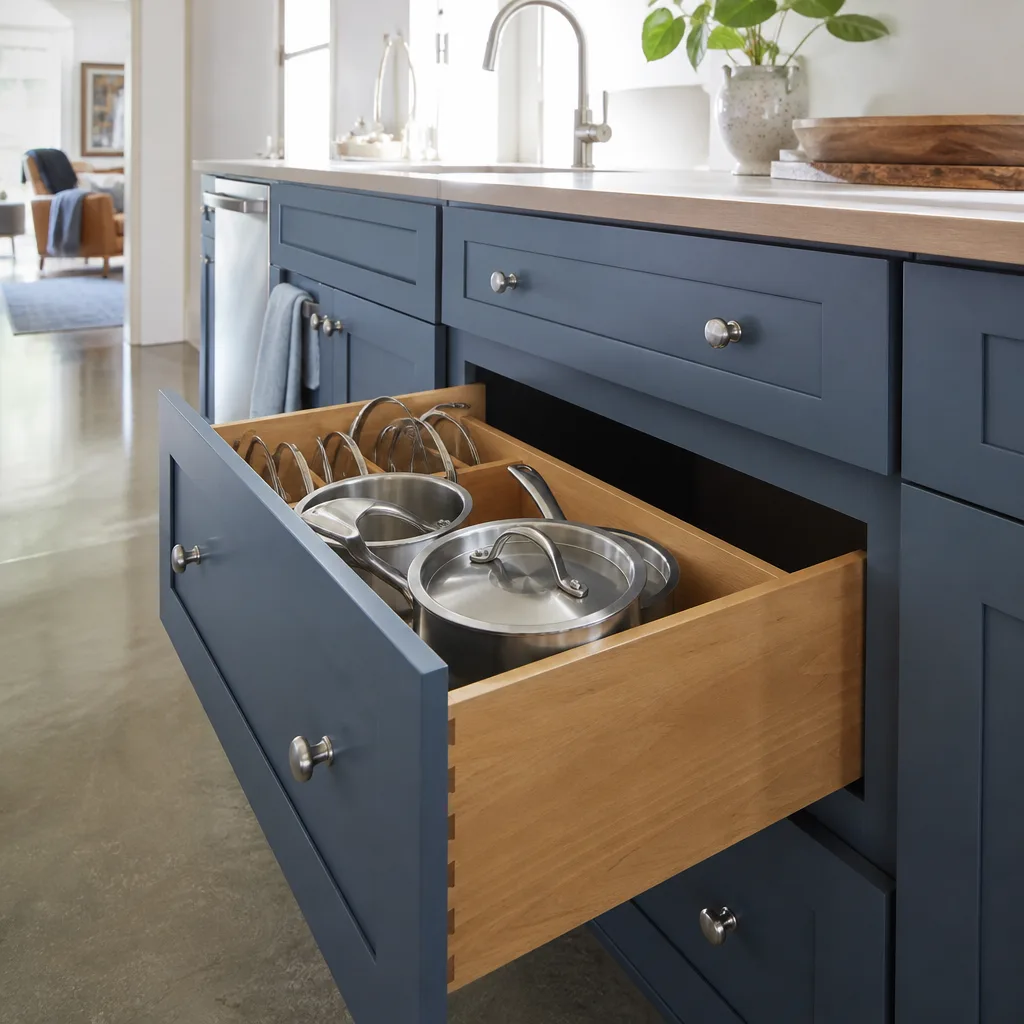
A bathroom-only specialist concentrates all of their craft on one room. A general contractor spreads identical expertise across kitchens, additions, structural repairs, and bathrooms. For a bathroom remodel, the specialist usually delivers the better result, because the details that determine whether a shower lasts ten years or fails in two are bathroom-specific.
The structural difference between the two comes down to how work gets done and who owns it.
- Subcontracting chains – A general contractor bids the job, then hires tile setters, plumbers, electricians, and waterproofing specialists who may never meet each other. Every handoff is a chance for a detail to get lost.
- Accountability gaps – When something leaks, the GC points at the tile setter, the tile setter points at the plumber, and the homeowner is left in the middle. A specialist is one call, one company, one answer.
- Warranty implications – A specialist who installs the shower system and stands behind it has an incentive to get the waterproofing right the first time. When the same job is split among four different companies, the warranty usually ends at the point of handoff.
- Product fluency – A bathroom specialist works with fixture brands every week and can speak to how a Kohler shower valve performs against a Moen or a Grohe without checking a catalog. A GC who does one bathroom every few months will often simply install whatever the supply house happens to stock.
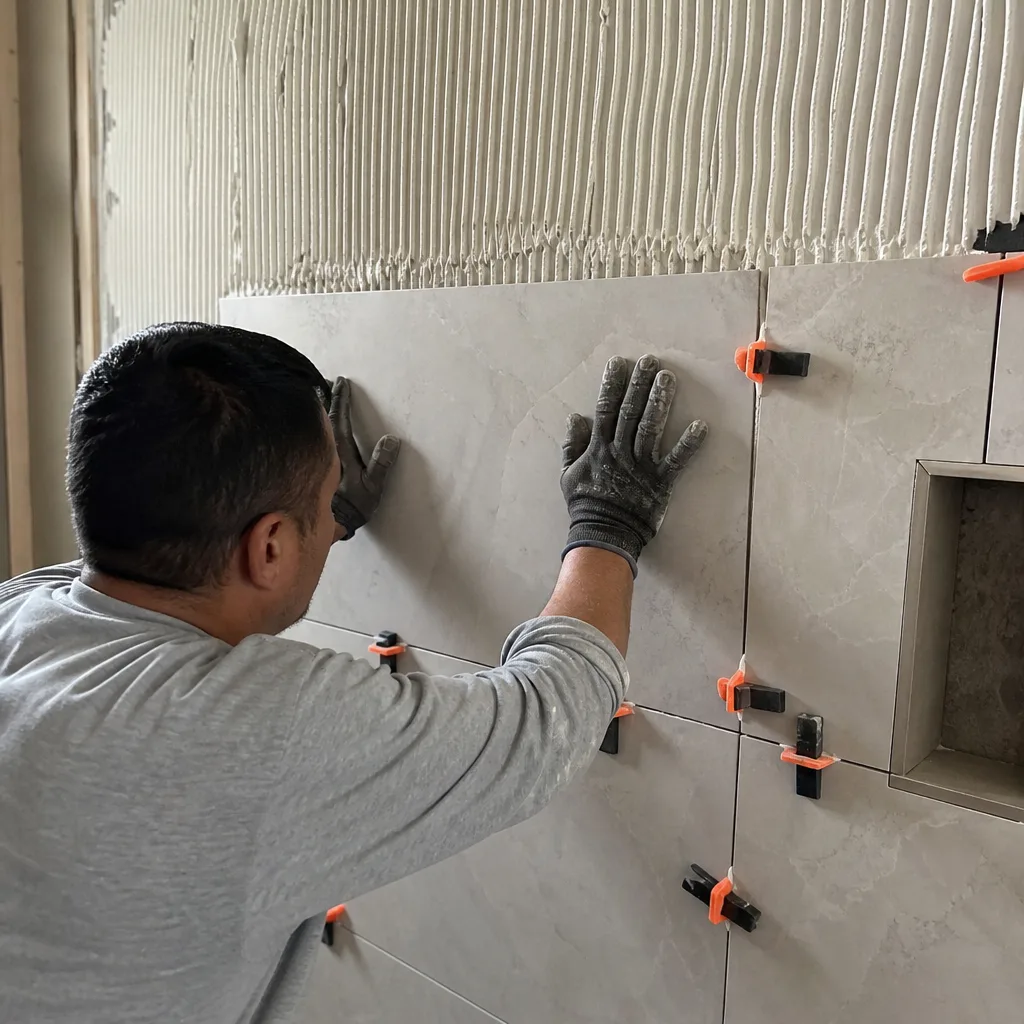
Schluter Systems is a good diagnostic here. A specialist who uses Schluter waterproofing and tile transitions understands that what’s behind the tile matters more than the tile itself. Ask any Las Vegas contractor you’re interviewing which waterproofing system they use and why. You’ll learn quickly who has done their homework.
For a deeper look at what a dedicated bathroom remodeler actually does on a job, see our guide to bathroom remodeling.
Step 3: What Red Flags Are Specific to the Las Vegas Market?
Las Vegas has a more aggressive door-to-door and storm-chaser-style contracting culture than most cities, and bathroom work attracts the same behavior. The pattern is predictable. A friendly stranger shows up after a rainy season, points at a cracked shower pan or old caulk line, and offers a bid on the spot. It’s a well-tested script.
Watch for these local signs:
- Door-to-door bids – A legitimate Las Vegas remodeler doesn’t need to knock on doors. They have a schedule. If someone shows up unsolicited with a “deal” while their crew is in the neighborhood, it’s an opening for a high-pressure sales appointment, not a real estimate.
- Unusually fast timelines – A full bathroom remodel in a permit-required city does not go from contract to finished in a week. Permits take time to issue, inspections have to be scheduled, and cure times for waterproofing and tile can’t be rushed. A two-week promise on a flooded-pan shower is either cutting corners or skipping the permit.
- No stated license number – In Nevada, contractors must include their license number on bids, contracts, and advertising. If it’s missing, ask for it in writing. If it still doesn’t appear, move on.
- Cash-only pricing – A legitimate contractor takes a check or a card and issues a receipt. Large cash payments are common in unlicensed renovation work and impossible to dispute later.
- Post-rainy-season solicitations – Las Vegas gets its wet season in winter and early spring. Roofing and exterior damage solicitations spike then, and so do bathroom “checks” from the same operators looking for water damage to exploit.
- Pressure to sign today – Every real contractor we’ve seen will happily let a homeowner think about a bid overnight. “This price is only good if you sign today” is a test, not a deadline.
When you’re interviewing, ask the contractor how long a typical bathroom job takes and why. The answer should reference permits, inspection windows, and cure times, not sales pressure.
Step 4: What Contract Language Is Non-Negotiable in Nevada?
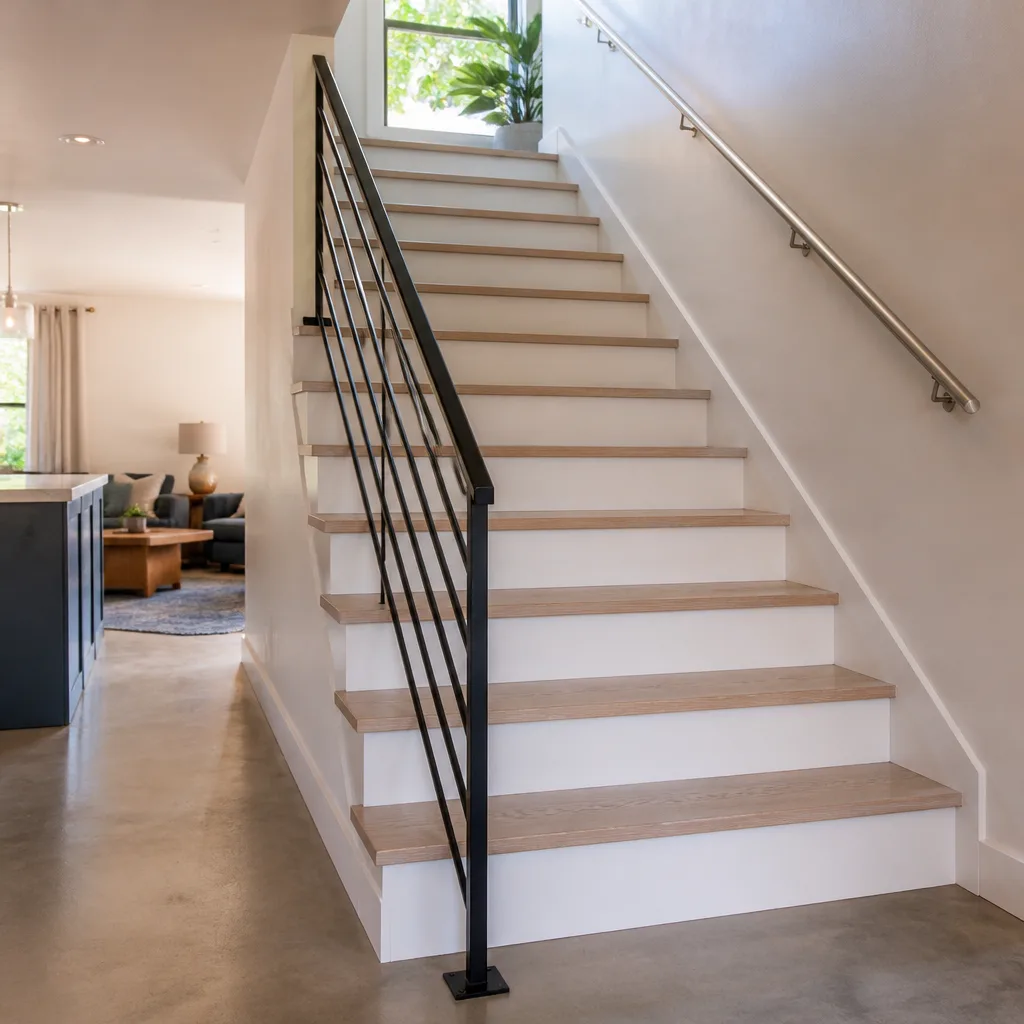
Nevada requires residential remodeling contracts to be in writing and to disclose several specific terms. The contract is your legal protection, and the language you accept is what you’ll live with if something goes wrong. A few clauses do most of the work.
Lien Waivers
A lien waiver is a document signed by a subcontractor or supplier confirming they’ve been paid for their work on your project. Without one, a supplier who never got paid by the contractor can file a mechanics lien against your home, even though you already paid for the materials. Insist on:
- Conditional lien waivers from every sub and supplier, released as payments are made
- A final unconditional lien waiver from each party at project close, before your last payment
- A written statement from the contractor that the payment schedule has no hidden creditors
Change Order Procedure
Change orders are where remodel budgets get destroyed. The contract should require a written, signed change order for any scope change, any material substitution, and any added labor. Verbal “we’ll just do this while we’re here” is not allowed to affect your invoice. If a contractor resists putting this in writing, that’s information worth having before you sign.
Payment Schedule Tied to Inspections
Nevada’s State Contractors Board limits how much a contractor can collect as a down payment on residential work (typically a 10 percent deposit ceiling unless the contractor has specific protections in place). Beyond that legal limit, the smart structure is milestone-based:
- Deposit at signing – Kept within the Nevada limit
- Rough-in complete – After plumbing and electrical rough-in pass inspection
- Waterproofing inspected – After Schluter or equivalent membrane passes inspection and before tile goes up
- Tile and fixtures set – After final fixture installation
- Final inspection and punch list – The last payment happens when you sign off on completion, not when the contractor says they’re done
Every milestone should have an inspection or written approval attached. Never pay the majority of a bathroom remodel before the waterproofing inspection passes. That one rule protects you more than any warranty clause on paper.
Step 5: How Do You Test a Contractor’s Fixture Brand Knowledge?
Ask an open-ended question about two fixtures and listen for a real answer. A bathroom specialist can speak to how a Toto toilet differs from a Kohler in flush performance and seat height, how a Grohe shower valve feels versus a Delta in daily use, and which fixtures make sense at which budget. A contractor without fixture depth either names one brand reflexively or pivots to “whatever you want, we’ll install it.”
Try these questions during the estimate interview:
- “If I want a Kohler shower valve but a Delta tub filler on the same job, is there a reason you’d steer me away from that mix?” – The specialist will talk finish matching, pressure compatibility, and warranty coordination. The generalist will look uncomfortable.
- “What’s the difference between a Moen and a Grohe in a walk-in shower build?” – A specialist talks rough-in valve compatibility, build quality, and replacement parts availability. A generalist might mention price and stop there.
- “Do you install Schluter waterproofing, and why?” – This tests whether the contractor understands the technical layer that determines shower longevity, not just surface appearance.
- “Show me what my budget buys at each tier.” – Sterling or American Standard at the entry point, Delta or Moen in the middle, Kohler, Toto, or Grohe at the top. A specialist can lay that out clearly. A generalist often can’t.
You’re not just testing product knowledge. You’re testing whether the contractor will guide you honestly toward the right fixture for your bathroom and budget, or push whatever they’ve got in stock. That distinction affects how the bathroom works for the next twenty years. If you’re specifically weighing the walk-in shower decision, our page on the walk in shower option covers the tradeoffs in detail.
Step 6: How Do Permits Work for a Las Vegas Bathroom Remodel?
Most bathroom remodels in Las Vegas require a permit, especially when plumbing is being moved, a tub is being converted to a shower, or electrical work is part of the scope. The city requires permits to be pulled by a licensed contractor, and the work is inspected at multiple stages. Cosmetic updates like paint and fixtures can often go unpermitted, but anything that changes the plumbing or electrical layout is a permitting job.
The permit process protects you in three ways:
- Verification of the contractor – The city checks the license before issuing the permit. If a contractor tries to skip this step, they’re telling you something about themselves.
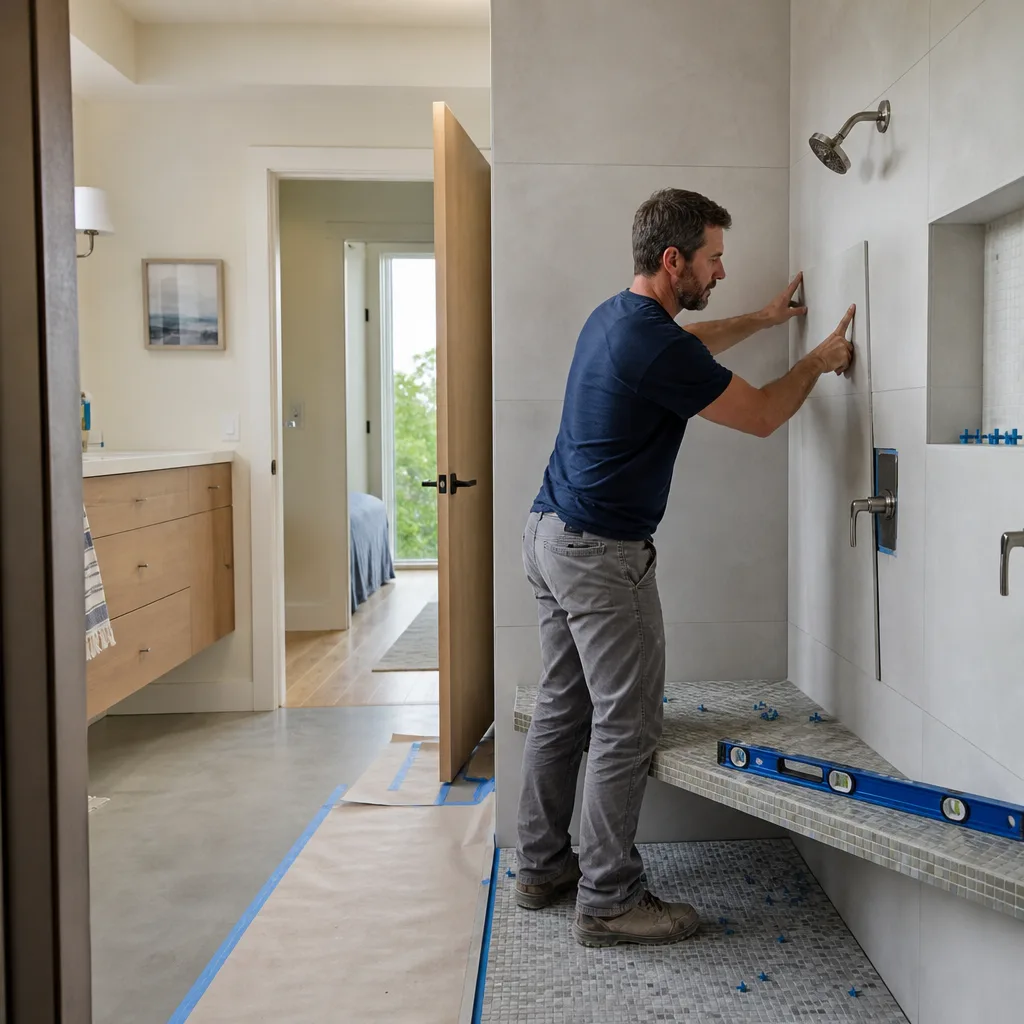
- Inspection milestones – Rough-in plumbing, electrical, and waterproofing are inspected before the next stage begins. A failed inspection stops the project until the issue is fixed. That’s a good thing.
- A documented paper trail – If you ever sell the house, permitted and inspected work is defensible. Unpermitted work can cost you at resale and complicate insurance claims.
Ask any contractor you interview for their permit process. They should be able to explain:
- Which permits are required for your specific scope
- Who pulls the permit (it should always be them, not you)
- What inspections are scheduled and in what order
- What happens if an inspection fails and who covers the cost of the fix
A contractor who suggests skipping the permit “because it’s just a bathroom” is someone who plans to hand you the legal risk. That’s the moment to end the interview.
See the difference
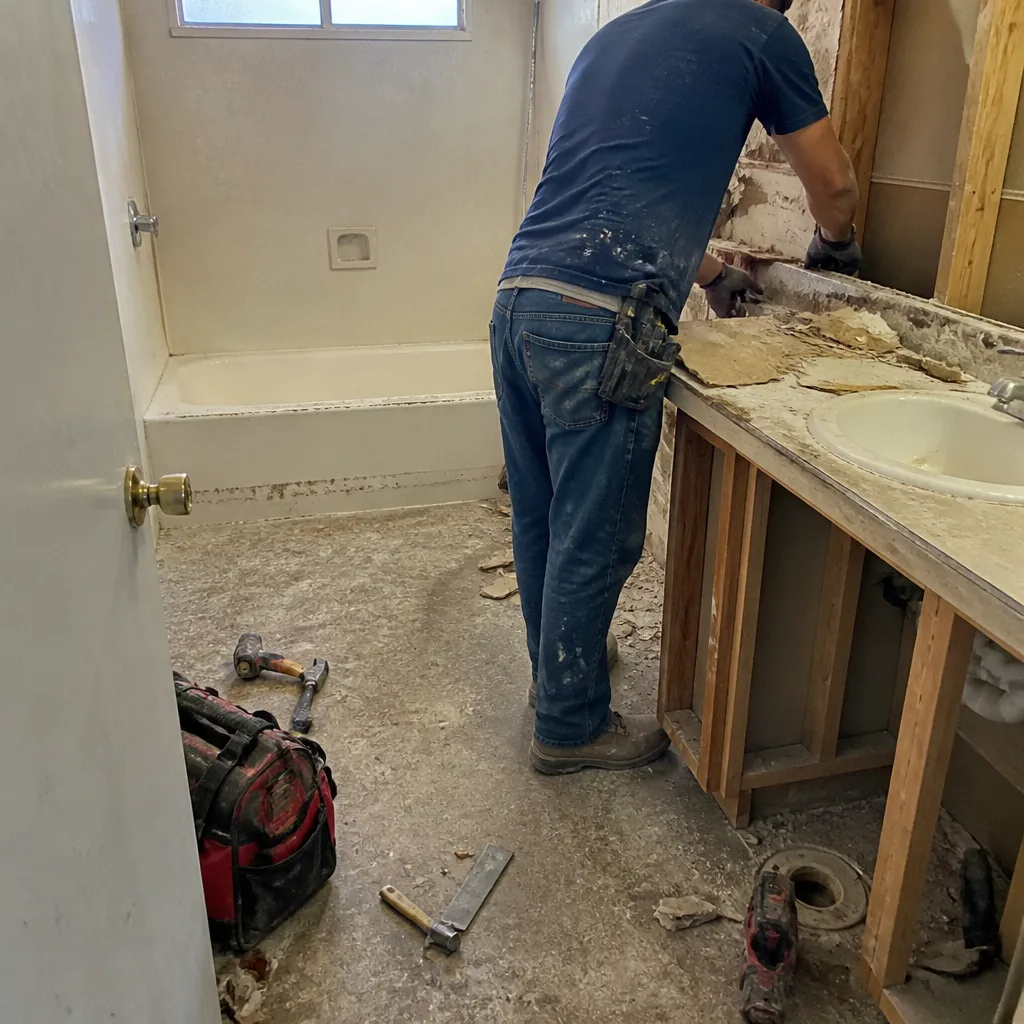 Before
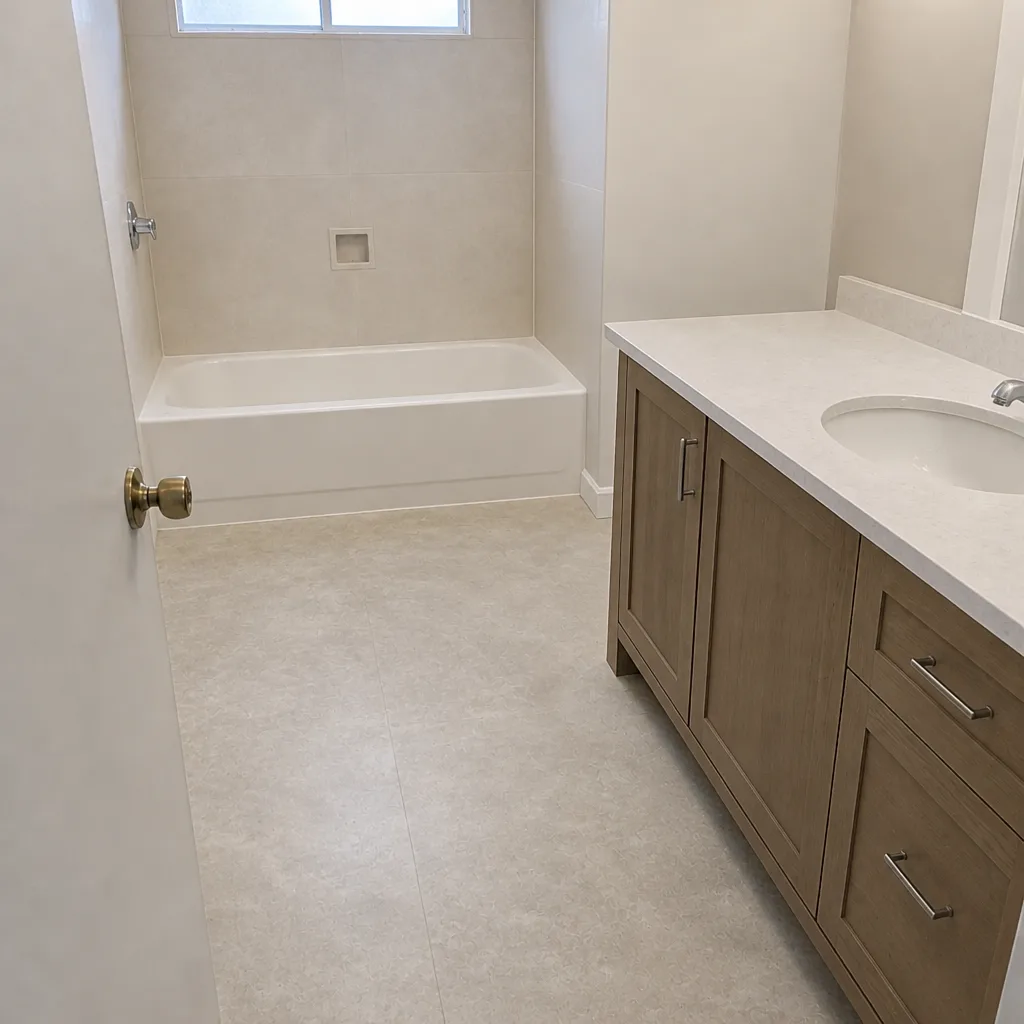 After
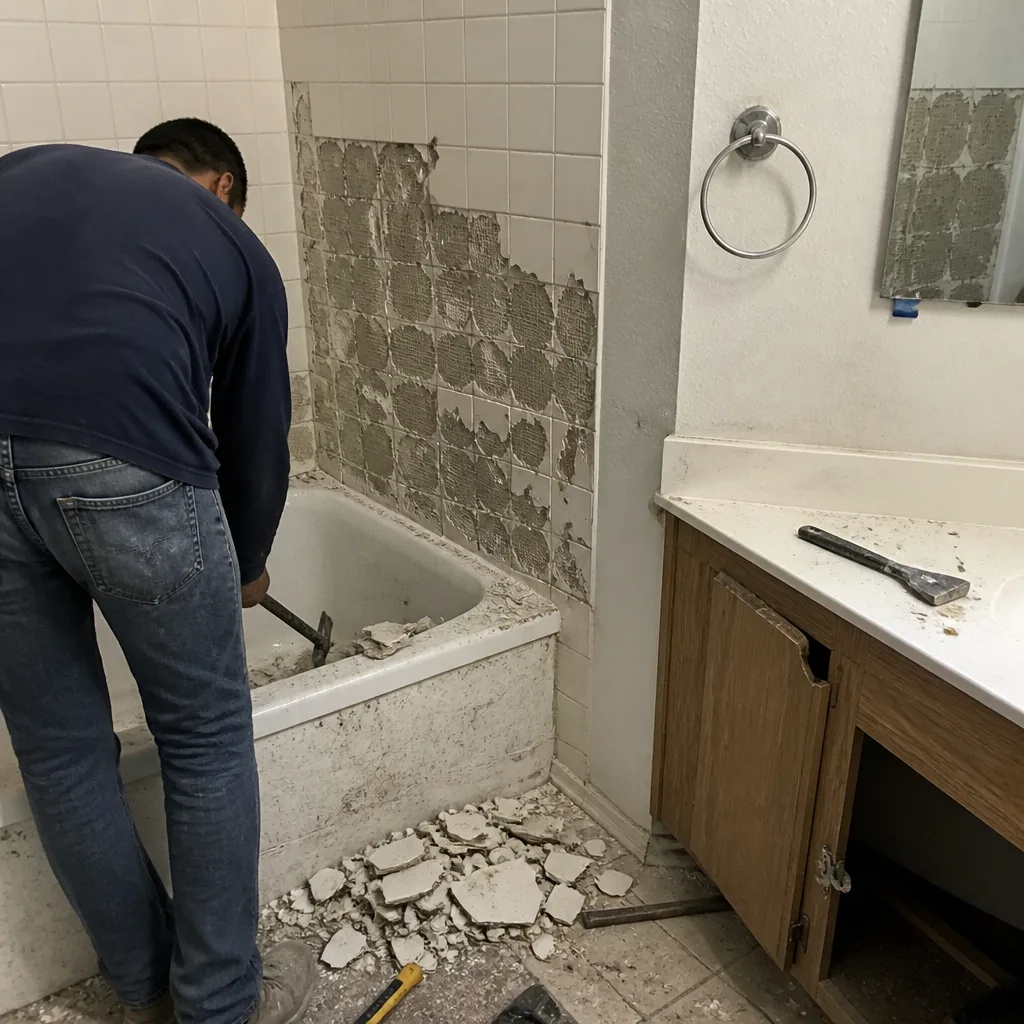 Before
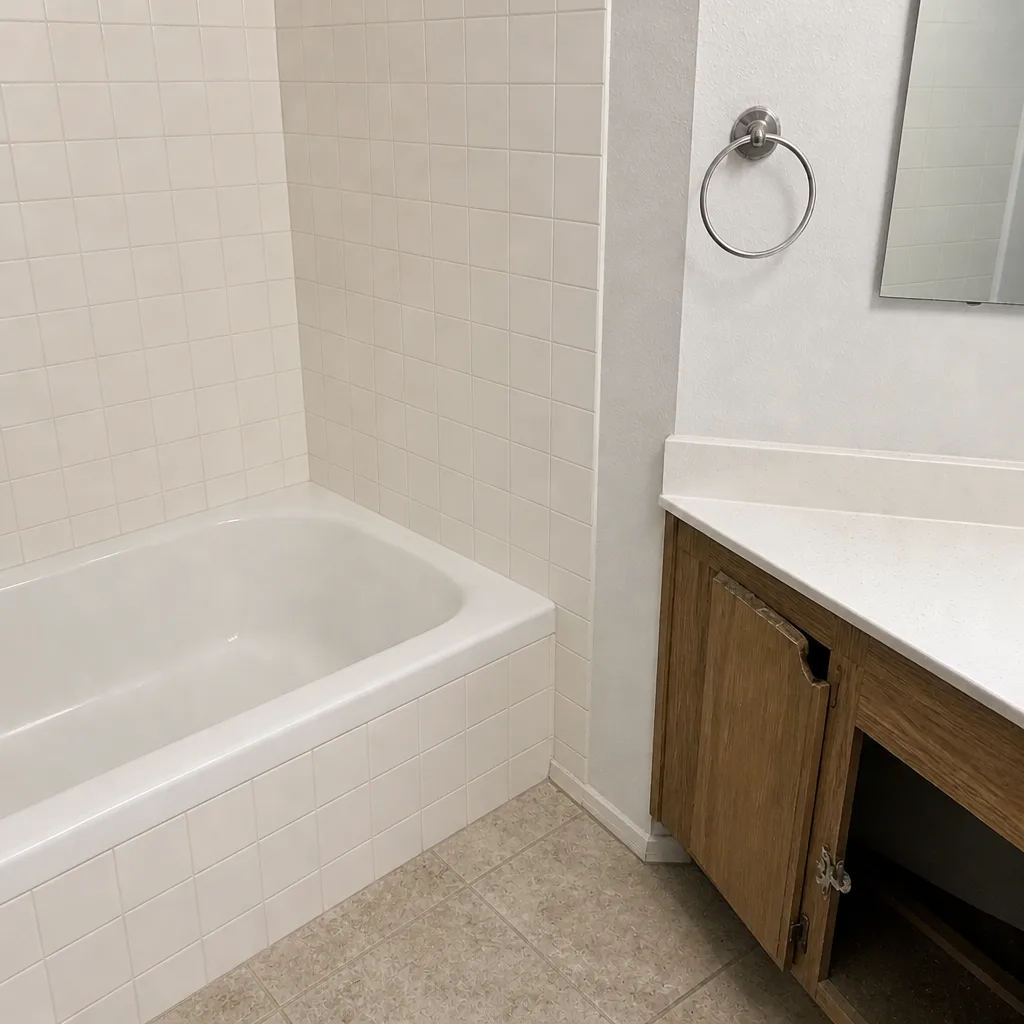 After
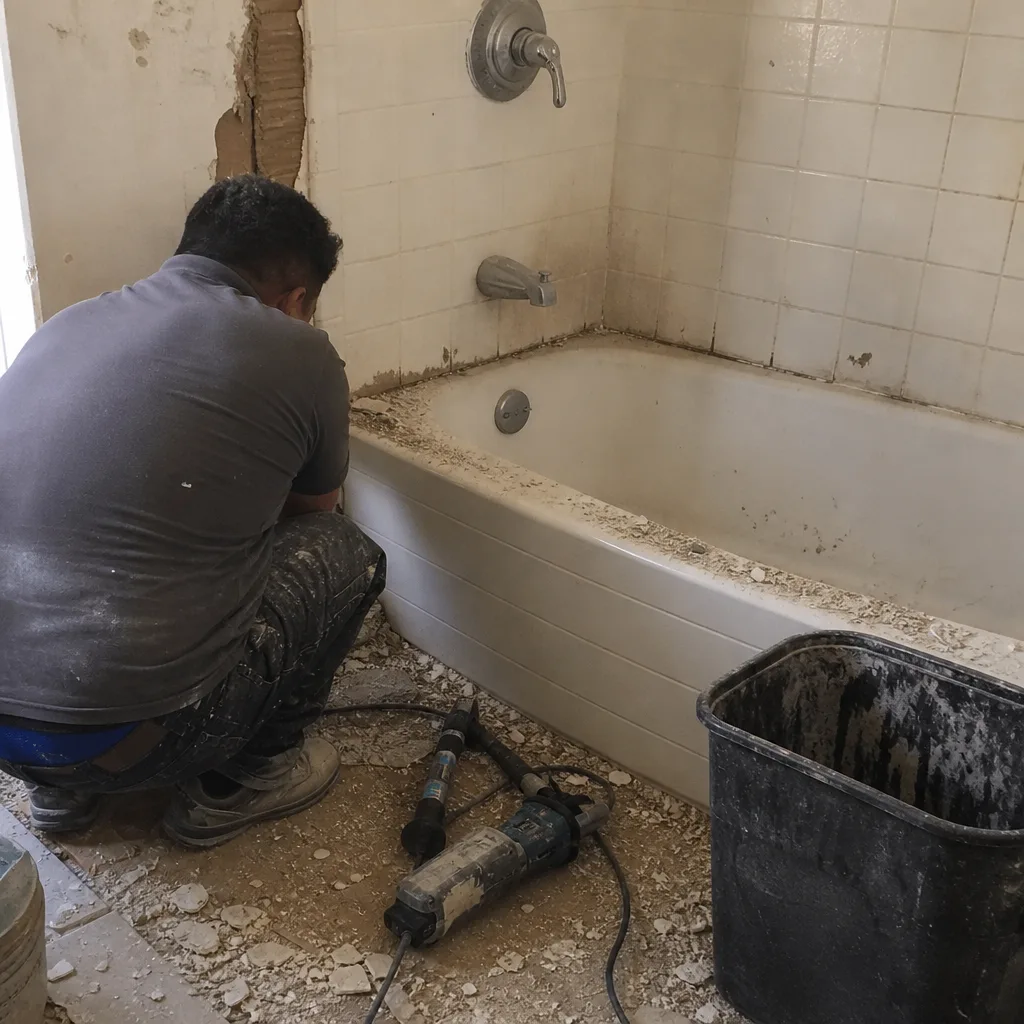 Before
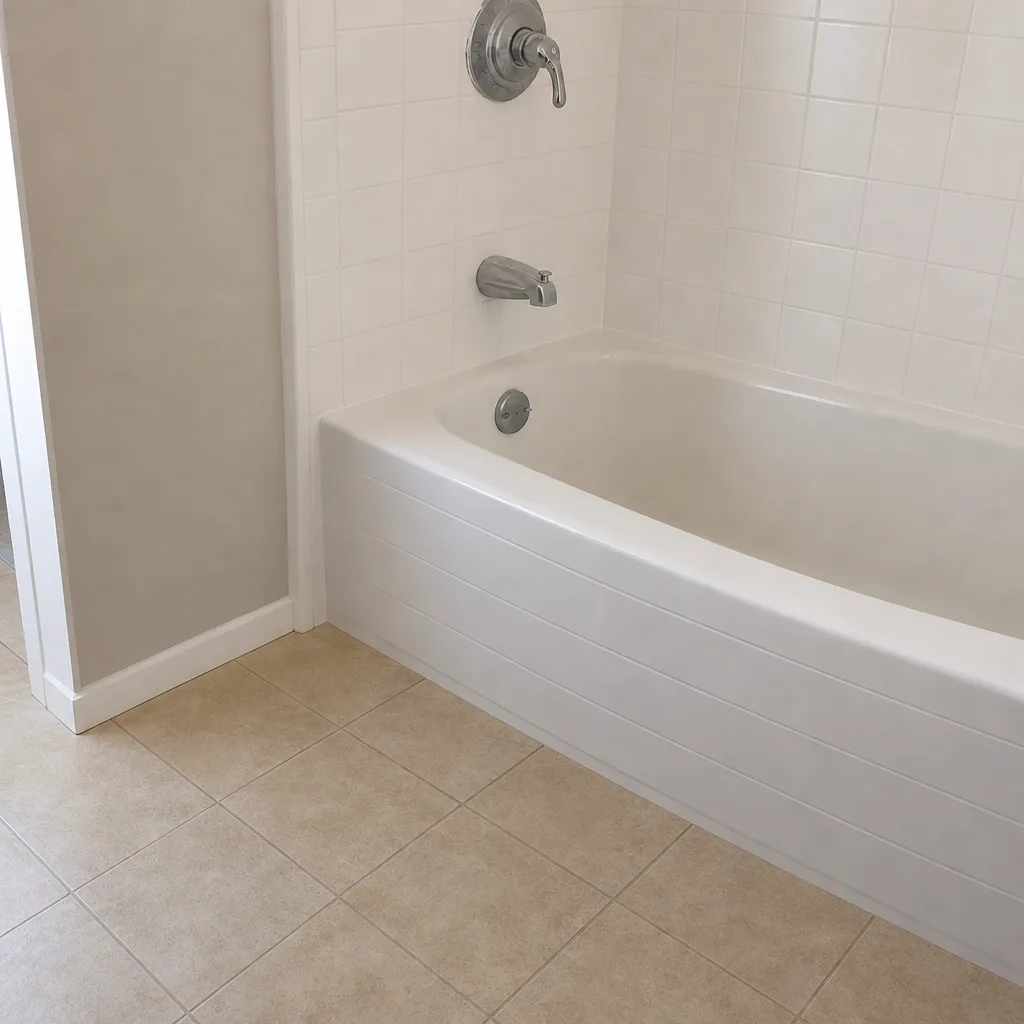 After
Step 7: Why Do Las Vegas Bathrooms Wear Differently?
Las Vegas bathrooms fight the desert in ways that coastal or humid-climate bathrooms don’t. The city sits in a low-humidity, high-temperature valley where the average rainfall is small but arrives in concentrated bursts. That combination shapes how a bathroom performs over time.
The main wear factors:
- Hard water – Mineral content in the Las Vegas Valley water supply is high, and shower valves, tile, and glass all collect scale if the surface and finish quality aren’t up to it. A cheap chrome finish pits faster here than in softer-water cities.
- Dust intrusion – Desert dust finds its way into gaps, caulk lines, and floor transitions. A shower installed without proper sealing and a smooth transition at the tile base will trap grit that softens the membrane.
- Intense heat cycles – Daily temperature swings stress adhesives and grout. Tile set over an improperly cured waterproofing layer can develop cracks within the first year. Cure times aren’t optional in Las Vegas.
- Concentrated rainy season – When rain does arrive, it arrives in volume. Homes with older showers or tub decks sometimes show leaks that were never triggered in dry months.
None of that means Las Vegas bathrooms are doomed. It means the quality of what’s behind the tile matters more here than in a city with forgiving mild weather. That’s a strong argument for a specialist who uses a waterproofing system like Schluter and installs fixtures rated for the water conditions. It’s also a strong argument for not treating a bathroom remodel as a fill-in job for a contractor who works mostly in other trades.
If you’re in the Las Vegas area and want a walk-through of how local conditions affect your specific bathroom, we can walk the room with you. See what we do in Las Vegas or call (888) 393-8208 for a free estimate.
Step 8: What Questions Should You Ask During the Estimate?
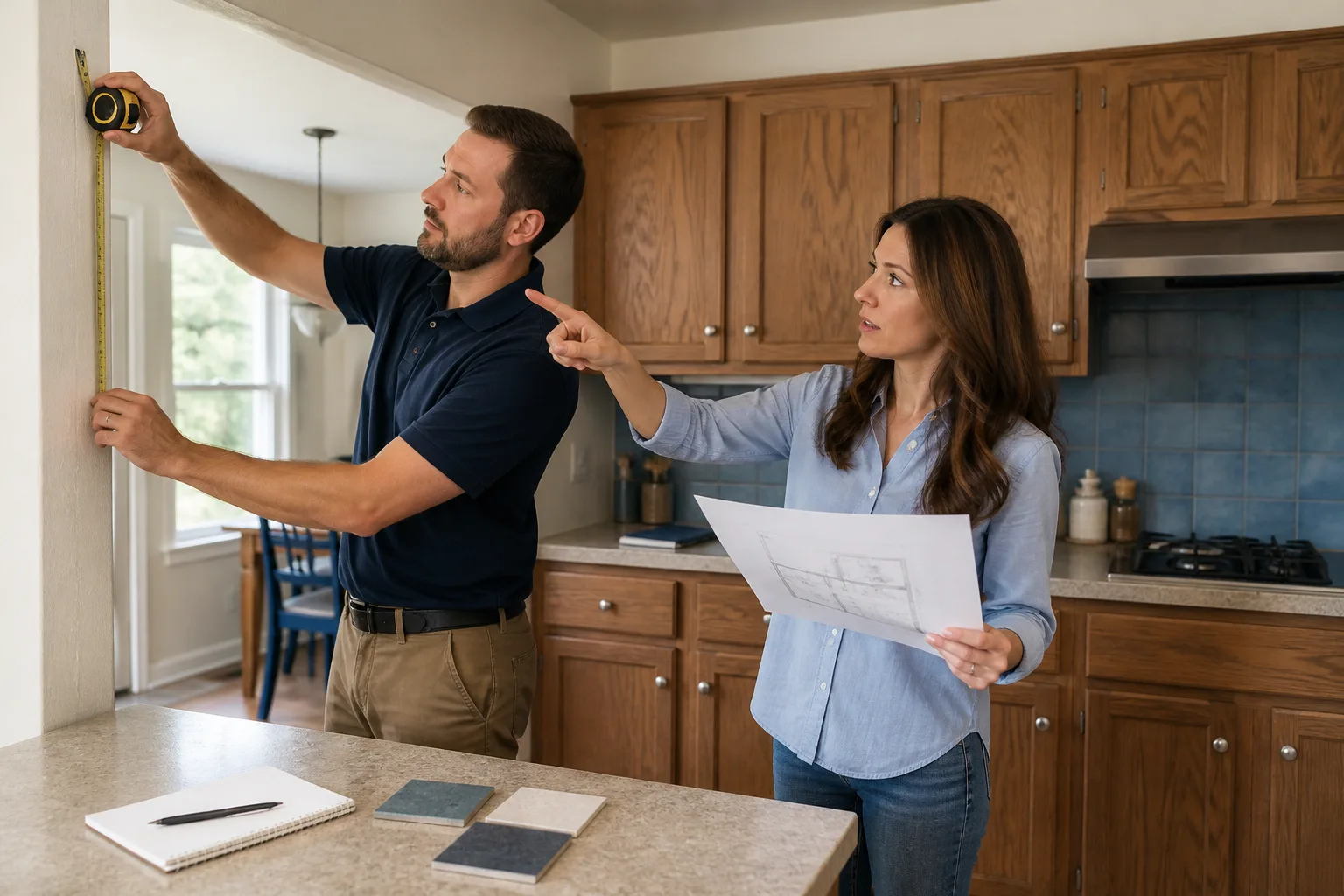
The estimate meeting is your best chance to see how a contractor thinks before you commit. The right questions surface expertise and reveal risk. Ask them in the same order every time, and compare answers.
- “Can you give me your license number right now?” – Answer should be immediate and written down. Hesitation is a red flag.
- “What’s the total scope and timeline, and what would change it?” – A good answer lists permit windows, inspection schedules, and material lead times. A bad answer is vague.
- “Which brands will you be installing in the shower valve, tub filler, toilet, and sink?” – Listen for how they answer. A specialist names specific brands and reasons. A generalist retreats to “whatever you want.”
- “What waterproofing system do you use?” – The answer should include a named system. Not just “we use waterproofing.”
- “What’s the payment schedule, and what milestones trigger each payment?” – Every payment should be tied to work completed and inspections passed. Not to a calendar date.
- “What happens if something isn’t right after the job finishes?” – The answer should be specific: how you reach them, how a callback is scheduled, what gets covered.
- “Can I have the estimate in writing, with line items?” – Every legitimate bid is a written line-item estimate. If it isn’t, it isn’t a bid. It’s a handshake.
- “Which specific Las Vegas permits will you pull for this scope?” – If they can’t answer, they either don’t pull permits or don’t know the city process. Either is disqualifying.
Bring a notebook. Compare answers across three estimates. The contractor who answers cleanly and in detail without prompting is the one to hire.
Common Mistakes to Avoid
- Hiring on price alone – The cheapest bid is usually the least specific one. In a market where unlicensed activity is common, a suspiciously low number is often the tell. Value the written scope and the license record more than the dollar figure.
- Skipping the NSCB database check – It’s free and it takes five minutes. Every homeowner we’ve seen get burned in Las Vegas skipped it. Do the check before you sign.
- Paying a large deposit upfront – Nevada limits deposits on residential work, and a milestone schedule protects both sides. Never pay more than the legal limit or beyond the completed work.
- Accepting verbal change orders – Every scope change should be written, signed, and priced before work starts. Verbal agreements are how a $20,000 bathroom becomes a $30,000 one.
- Ignoring lien waivers – A missing waiver means a supplier can file a lien against your home even after you’ve paid the contractor in full. Collect waivers at every payment milestone.
- Assuming the general contractor’s bathroom work is bathroom-specialist quality – A GC who does one bathroom every few months is not the same as a specialist who refines the same process monthly. The details are where the difference lives.
- Treating the permit as the contractor’s problem alone – Ask for the permit number and confirm it’s been pulled in your name as the property owner. If it’s missing, the work isn’t protected.
When to Call a Professional
A bathroom remodel is not a DIY project when plumbing, electrical, or waterproofing is part of the scope. In Las Vegas, most of the showers and tubs that fail within five years were installed without a permit or without proper waterproofing. Both mistakes are expensive to correct because they require demo work to reach the problem.
Call a professional when you’re facing any of the following: a shower or tub that leaks at the base, plumbing that needs to be moved to accommodate a walk-in shower, an aging bathroom that needs a full fixture replacement, or a tub-to-shower conversion for accessibility. Also call before you sign anything with a contractor who hasn’t produced a license number or a current certificate of insurance. Getting a second opinion is cheap compared to undoing a bad decision.
Dayspring Bath Remodeling offers free estimates in Las Vegas and works exclusively on bathrooms. Call (888) 393-8208 to schedule yours. We answer 24/7. Fast dispatch from 7am to 7pm, Sunday through Friday.
Frequently Asked Questions
Yes. Nevada requires a contractor to hold a current license from the State Contractors Board to perform most bathroom remodeling work, and permits are pulled under that license. Hiring an unlicensed contractor means you may not have recourse through the board and the work may not be insurable. Verify the license number directly through the NSCB database before you sign anything. Call (888) 393-8208 if you want help understanding what a license classification covers – free estimates are available.
Search the contractor’s license number or business name in the Nevada State Contractors Board database and look for an active status. Active means the license is current, bonding and insurance requirements are being met, and you can file a complaint with the board if something goes wrong. Inactive, expired, or suspended status means the contractor isn’t legally able to take your job. Ask the contractor for their license number in writing before the estimate, then look it up. Call (888) 393-8208 for an estimate from a licensed bathroom specialist.
A bathroom specialist is usually the better choice for bathroom-only work, because the details that determine whether a shower lasts ten years or two (waterproofing, fixture compatibility, inspection timing) are things a specialist does every week. A general contractor spreads the same attention across kitchens, additions, and structural work, so the bathroom gets a fraction of their focus. Ask any contractor you interview which waterproofing system they use and how they handle fixture brand selection. The answers will sort them quickly. Call (888) 393-8208 to compare a specialist option against your current bid.
Watch for door-to-door bids, cash-only pricing, missing license numbers on the written estimate, and unusually fast timelines for a permit-required project. In Las Vegas, the storm-chaser pattern is common, especially after the winter rainy season, and the script is always a friendly unsolicited visit followed by a “deal.” Legitimate contractors don’t need to knock on doors. They also don’t ask for large cash deposits or promise a full remodel in a week. Any of those signals should end the interview. Call (888) 393-8208 for a free estimate from a contractor who will put their license number on the paperwork.
A good payment schedule ties each payment to a completed milestone and a passed inspection, not to a calendar date. Nevada limits how much a contractor can collect up front on residential work, and the rest should be tied to rough-in completion, waterproofing inspection, tile and fixture installation, and final inspection. Never pay the majority of the project before the waterproofing inspection is signed off. Each payment should also include a conditional lien waiver from the subcontractors paid at that stage. Call (888) 393-8208 and we’ll walk you through what a fair schedule looks like for your project.
Most bathroom remodels in Las Vegas take several weeks from contract signing to final inspection, with the timeline driven by permit issuance, inspection scheduling, and material lead times – not by how fast a crew can swing a hammer. Waterproofing and tile both require cure times that can’t be skipped without risking failure. Any contractor promising a full remodel in a single week is either cutting corners or skipping the permit. For a timeline calibrated to your scope, call (888) 393-8208 – estimates are free.
The Bottom Line
Hiring a bathroom remodeling contractor in Las Vegas comes down to verification, not vibes. Confirm the license through the Nevada State Contractors Board database, read the status field carefully, and walk away from anything inactive. Choose specialists over generalists when the work is bathroom-specific, because the details that decide whether a shower lasts are the details that only get practiced weekly. Get a written line-item estimate, insist on lien waivers, and tie payments to inspection milestones, not calendar dates. Ask fixture questions and listen to how the answers land. The right contractor will welcome every one of those checks. The wrong one will find a reason to skip them.
Dayspring Bath Remodeling works only on bathrooms – full remodels, walk-in shower builds, and tub-to-shower conversions – and works with eight fixture and systems brands including Kohler, Moen, Delta, Grohe, and Schluter. Our technicians have up to 10 years of experience. If you’re ready to move from research to a real number, call (888) 393-8208 for a free estimate. We answer 24/7. Fast dispatch from 7am to 7pm, Sunday through Friday.
Written by the team at Dayspring Bath Remodeling.