Last updated November 18, 2026
Free in-home design visit - walk-in showers, tub-to-shower conversions, and Kohler, Moen, and Delta fixtures planned to your exact space
Bathroom Remodeling Cost Breakdown: The Las Vegas Homeowner’s Reference for 2026
Here’s the number that trips up most Las Vegas homeowners: national cost guides put a mid-range bathroom remodel at roughly $12,000 – $15,000, and those figures are directionally right for a lot of the country. They are not right for Las Vegas. Projects here routinely land 20% to 35% above those benchmarks, and the reasons aren’t mysterious once you know them. Nevada’s licensed-trade labor rates run higher than the national databases assume. The water is hard enough to change which materials make sense. And a hospitality-driven luxury market pulls the top fixture tier up along with everything under it. This reference breaks down where Las Vegas prices actually come from in 2026, line by line, so you can bid your project from real numbers instead of someone else’s averages.
Quick Answer
A mid-range full bathroom remodel in Las Vegas typically runs $16,000 – $28,000 in 2026, with cosmetic refreshes starting around $9,000 and premium walk-in shower builds reaching $30,000 and up. Labor, hard-water-resistant materials, Clark County permit and inspection fees ($300 – $900 depending on scope), and your fixture tier drive most of the variance. The final price is set by a written, line-item estimate, not by a range.
Styles & brands we work with
- Walk-in shower
- Tub-to-shower
- Freestanding tub
- Kohler
- Moen
- Delta
- Frameless glass
Table of Contents
- Why Las Vegas Bathroom Costs Run Higher Than National Averages
- The Labor Line: What Licensed Nevada Trades Actually Cost
- The Hard Water Surcharge Nobody Budgets For
- Fixture Tiers Decoded: Delta and American Standard vs. Kohler vs. Toto and Grohe
- Permits and Inspections: The Clark County Line Item Cost Guides Skip
- The Full Line-Item Breakdown
- How to Phase a Remodel Budget When You Can’t Do It All at Once
- Walk-In Showers and Tub-to-Shower Conversion Costs
Why Las Vegas Bathroom Costs Run Higher Than National Averages
Most published bathroom cost guides are built from pulled national averages, which means they blend high-cost metros with low-cost ones and land on a number that fits neither. Las Vegas sits on the expensive side of that blend, and it sits there for four reasons that come up in almost every project we quote.
First, licensed-trade labor. Nevada licenses plumbers and electricians at the state level, and the licensing requirement narrows the pool of available tradespeople. Fewer licensed hands in a growing metro means higher hourly rates than the national databases assume. That premium shows up most in rough-in plumbing, gas line work if a fixture changes, and any electrical change where a new GFCI circuit or exhaust fan circuit is added.
Second, the water. Las Vegas tap water is hard, and hard water attacks the materials that make a bathroom last. Grout, sealers, shower glass coatings, and fixture finishes all take a beating that a Denver or Phoenix install doesn’t face in the same way. The right products cost more up front. The wrong ones cost more later.
Third, the local expectation. The hospitality culture here means people know what a well-finished bathroom looks like. That raises the baseline for tile work, lighting design, and fixture quality in even mid-tier projects. A starter bathroom in Las Vegas is a nicer bathroom than a starter bathroom in a lot of markets.
Fourth, permits. Clark County permit and inspection fees are real, variable, and almost universally left out of national-cost estimates. We cover those separately below.
None of this means Las Vegas is a bad place to remodel. It means the plan has to start from local numbers. Our bathroom remodeling work in this city is priced from what things actually cost here, and that’s the difference between a budget that holds and one that surprises.
The Labor Line: What Licensed Nevada Trades Actually Cost
Labor is the largest single line in most Las Vegas bathroom budgets, often 40% to 50% of the total. The trap is assuming the percentage is the same as a national project. It isn’t, because the underlying hourly rates aren’t.
Three trades dominate:
- Plumbing. Rough-in and finish plumbing is the highest-risk line in the budget. A licensed Nevada plumber costs more per hour than the national benchmark, but the cost of an unlicensed rough-in that fails inspection or leaks behind a wall dwarfs any savings.
- Tile setting. Bathroom tile is exacting work, and the Las Vegas market has a limited pool of setters who can do large-format tile, niches, and sloped shower pans without visible lippage. That skill commands a rate above the national average.
- Electrical. Adding a circuit for a heated floor, a new exhaust fan with a humidity sensor, or a lighting redesign means licensed electrical work, never a handyman shortcut.
Where labor savings are genuinely available: demo, haul-away, and non-structural framing are not licensed trades, and a well-run remodel keeps those tasks efficient. The savings from a streamlined process are real. The savings from skipping the licensed trades aren’t savings – they’re deferred costs.
One structural factor matters here: a bathroom-only specialist keeps the same trade crews working the same kind of room. Our technicians have up to 10 years of experience, and because they work on bathrooms exclusively, that experience compounds instead of spreading across unrelated work. When we quote a Las Vegas job, the labor line reflects real local rates from tradespeople who do this every day.
The Hard Water Surcharge Nobody Budgets For
This is the section most cost guides skip entirely, and in Las Vegas it’s the difference between a bathroom that still looks right in five years and one that doesn’t. Las Vegas water is hard enough that standard materials underperform here in ways they don’t elsewhere.
What that costs, line by line:
- Grout and sealer upgrades. Standard cementitious grout with a basic sealer is the default in many markets. In Las Vegas, epoxy grout or an upgraded cementitious grout with a high-quality sealer makes more sense, and that adds real cost. Epoxy grout is not twice as much, but it’s meaningfully more than the commodity option and takes longer to install.
- Water-resistant backer and waterproofing. A properly waterproofed shower uses a system like walk in shower specialist standard Schluter – a bonded waterproofing membrane, not just green board and hope. That system is the safeguard against the slow hidden leaks that do the most damage in a hard water environment. The material cost is modest. The labor cost to do it right is the expensive part, and it is not optional.
- Fixture finish selection. Standard polished chrome takes hard water spots visibly and coatings wear. A PVD (physical vapor deposition) finish – a harder, more durable finish applied to brass or stainless – holds up to mineral-heavy water far better. That costs more than basic chrome, but it lasts meaningfully longer in Las Vegas conditions.
- Shower glass treatment. Untreated glass in a hard water bathroom clouds over time. A hydrophobic coating on the glass is a real cost line and a real protection.
None of this is upselling. It’s matching materials to the water. The wrong choice here doesn’t fail on day one. It fails in year three, and by then the cost of redoing it dwarfs any savings the original installer passed along.
Fixture Tiers Decoded: Delta and American Standard vs. Kohler vs. Toto and Grohe
This is where a Las Vegas bathroom budget can flex the most, and where clear thinking about $/quality saves real money. Fixtures fall into three broadly recognizable tiers, and the price steps between them are meaningful.
Tier One: Delta, American Standard, Moen, Sterling
These are the workhorse brands, and they’re genuinely good. Delta has a long track record on cartridge-based faucets and shower valves, and American Standard makes durable toilets and tubs that hold up well. In a hard water market, the right Delta or American Standard fixture with a quality finish is a solid, honest choice. The price jump from tier one to tier two is often 30% to 60% on comparable fixtures.
Tier Two: Kohler
Kohler sits in the design-forward middle. The finish options are broader, the visual language is more distinctive, and the build quality is consistent. A Kohler bathroom reads as more intentional because the details are more considered. Where the premium is justified: if you plan to stay in the home and the design matters to you, or if resale value is a priority in your Las Vegas neighborhood. Where it’s purely aesthetic: if you’re choosing Kohler for a bathroom you’ll rarely use.
Tier Three: Toto and Grohe
Toto and Grohe are the premium tier, and in Las Vegas, Toto in particular earns part of its premium from function. Toto toilets use less water per flush while performing better than many standard toilets – a real advantage in a city where water efficiency matters to every homeowner’s monthly bill and to local conservation expectations. Grohe’s thermo valves and shower systems hold consistent temperature and hold up against mineral buildup better than lower-tier cartridges.
Where Toto and Grohe are purely aesthetic: the visual statement. A Toto toilet performs well. It also makes a statement. Pay for the statement if you want it. Don’t let anyone tell you it’s a durability necessity.
The right move is matching tier to intent. Our job is making that match honestly, from Sterling and Delta at the accessible end to Toto and Grohe at the premium end, so the recommendation follows the bathroom and the budget rather than a single brand.
Permits and Inspections: The Clark County Line Item Cost Guides Skip
Clark County permit and inspection fees for bathroom work typically run $300 – $900 depending on scope. A simple cosmetic refresh may not require a permit at all. Plumbing relocations, drain changes, adding a shower where one wasn’t, and electrical changes almost always do.
Here’s how permitting actually works on a Las Vegas bathroom project:
- Determine what needs a permit. Moving a drain, relocating plumbing, adding a shower valve, running new electrical circuits, and changing the exhaust system each trigger permit requirements in most cases. Surface tile and paint usually don’t.
- Submit plans and pay fees. The scope of work determines the fee. A minor plumbing change is a smaller fee than a full rough-in relocation or a new shower pan.
- Schedule inspections. Rough-in inspections happen before walls close. Final inspection happens after the work is complete.
- Keep the record. A permitted and inspected bathroom matters at resale. Unpermitted plumbing or electrical work can complicate a sale and can hurt your insurance position if something goes wrong later.
The cost of skipping a permit is not the fee. It’s the problem the next owner’s inspector finds. Pulling permits and passing inspections is part of how we work, and it’s part of the estimate, never a surprise line added later.
The Full Line-Item Breakdown
Typical 2026 Las Vegas estimates broken out by line. These are ranges, not quotes. The written estimate sets the final price.
| Line Item | Typical Range (Las Vegas, 2026) |
|---|---|
| Demo and haul-away | $400 – $1,200 |
| Plumbing (rough-in + finish) | $2,000 – $6,000 |
| Electrical (circuits, fan, lighting) | $800 – $2,500 |
| Waterproofing system (Schluter-type) | $600 – $1,500 |
| Tile and setting labor | $2,500 – $7,000 |
| Grout, sealer, and glass treatment (hard-water upgrade) | $400 – $1,200 |
| Vanity and countertop | $800 – $3,500 |
| Fixtures – tier one (Delta, American Standard) | $700 – $1,800 |
| Fixtures – tier two (Kohler) | $1,200 – $3,000 |
| Fixtures – tier three (Toto, Grohe) | $2,000 – $5,500 |
| Mirrors, lighting, hardware, paint | $400 – $1,200 |
| Clark County permits and inspections | $300 – $900 |
Stack those up and the pattern that emerges is why the national average is misleading. A tier-one finish with a standard tub-shower lands near the low end. A tier-three fixture package with a walk-in shower and a heated floor lands near the top. The spread isn’t a sales tactic – it’s the actual scope difference between two projects that are both called “a bathroom remodel.”
Common categories of finished project in Las Vegas, with typical totals:
- Cosmetic refresh (paint, fixtures, hardware, no layout change): $9,000 – $14,000
- Mid-range full remodel (new tile, new vanity, tub-shower, tier-one or tier-two fixtures): $16,000 – $28,000
- Walk-in shower rebuild with premium fixtures (Schluter system, custom pan, tier-three fixtures): $22,000 – $38,000
- Luxury primary suite bathroom (large format tile, dual vanity, freestanding tub, premium finishes): $35,000 and up
If you’re not sure which bucket your project fits, that’s what the free estimate is for. Call (888) 393-8208. We answer 24/7. Fast dispatch from 7am to 7pm, Sunday through Friday.
How to Phase a Remodel Budget When You Can’t Do It All at Once
Not every budget covers the whole bathroom in one pass, and that’s fine. What isn’t fine is phasing in an order that means redoing work. The right sequence is driven by two things: failure risk and resale impact.
The order we’d recommend:
- Waterproofing and any leak or moisture issue, first. If there’s a failed shower pan, a leaking valve, or a soft spot in the subfloor, that has to be resolved before anything cosmetic. Any cosmetic tile or paint installed over a moisture problem will fail.
- Plumbing rough-in and electrical. If a layout change is planned – moving a drain, relocating the shower – that happens while walls are open. Moving the walls again later to do it costs double.
- Tile and the permanent shower build. Once the waterproofing and rough-in are done, the tile is the next piece of the permanent envelope. Don’t try to do this in two halves.
- Vanity, vanity top, and sink. This is the highest-impact cosmetic line and the one that shows in photos and resale listings.
- Fixtures. Faucets, shower heads, and trim can actually be swapped later if the rough-in valve was spec’d correctly from the start. That means tier one now, tier three later is genuinely possible. This is the piece of the budget most worth phasing.
- Mirrors, lighting, and paint. Last, smallest, and easiest to upgrade.
What not to phase: waterproofing, plumbing rough-in, and electrical. Those are permanent once installed, and redoing them later is full demo plus full reinstall.
The result: a phased budget that moves from failure risk outward to aesthetics, and a bathroom that holds up while you finish it. We’ll draw up a phased plan and a phased estimate as part of the free estimate.
Walk-In Showers and Tub-to-Shower Conversion Costs
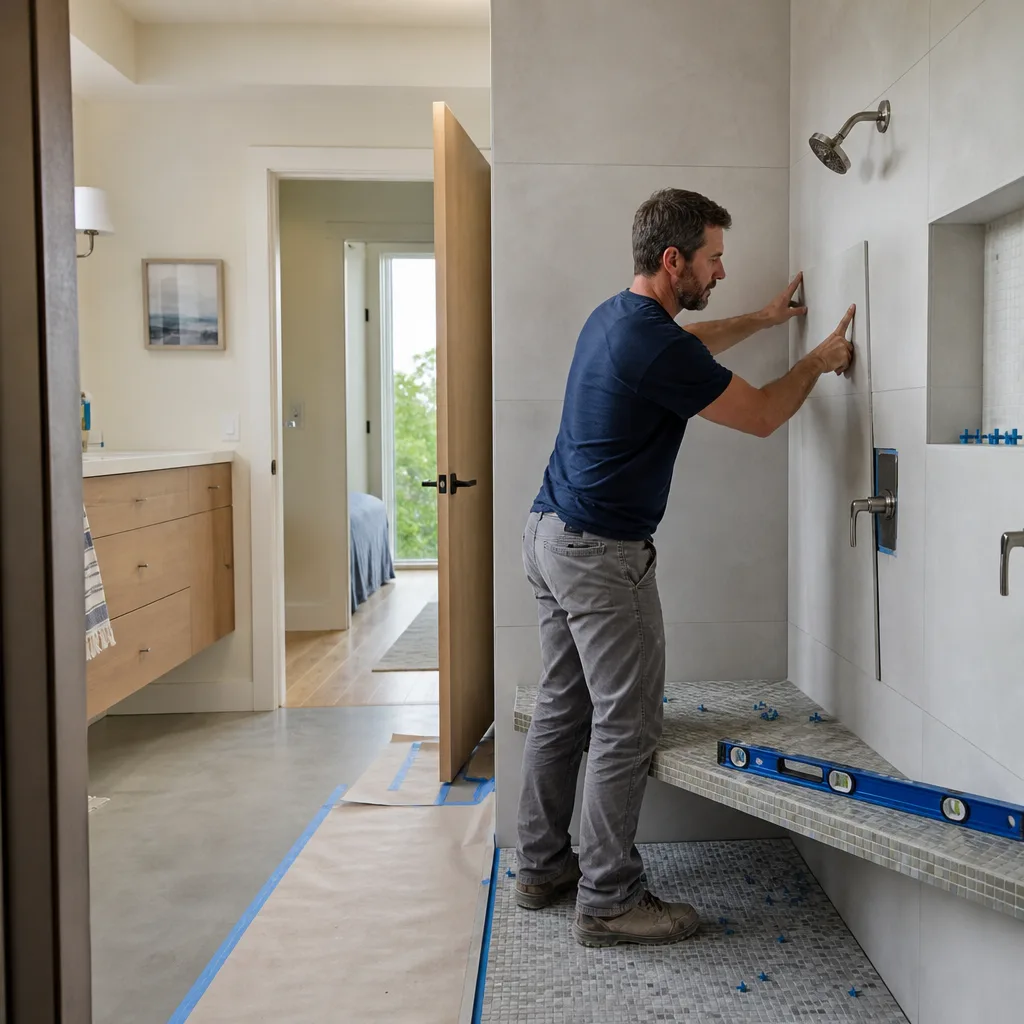
A walk-in shower build in Las Vegas typically runs $8,000 – $16,000 as a standalone project. The range depends on size, tile selection, whether a custom zero-threshold pan is required, and whether plumbing has to be relocated. A tub-to-shower conversion runs $6,000 – $14,000 depending on what’s behind the tub, what needs to be re-plumbed, and what’s being built in the reclaimed space.
Three things drive the cost up more than people expect:
- The pan. A custom sloped shower pan takes real labor and skill. It’s also the place where corners most often get cut. A preformed pan the wrong shape for the bathroom means visible slope problems or a future leak.
- Waterproofing. A walk-in shower has more surface area to protect than a tub-shower. That’s more Schluter membrane, more care, and more cost. And it’s the right call – it’s the difference between a shower that lasts decades and one that doesn’t.
- Tile complexity. Large-format tile, mosaic tile niche work, and complicated patterns cost more in both material and installation time. Straight-stacked large-format is the more cost-effective choice, and it looks better in a lot of bathrooms anyway.
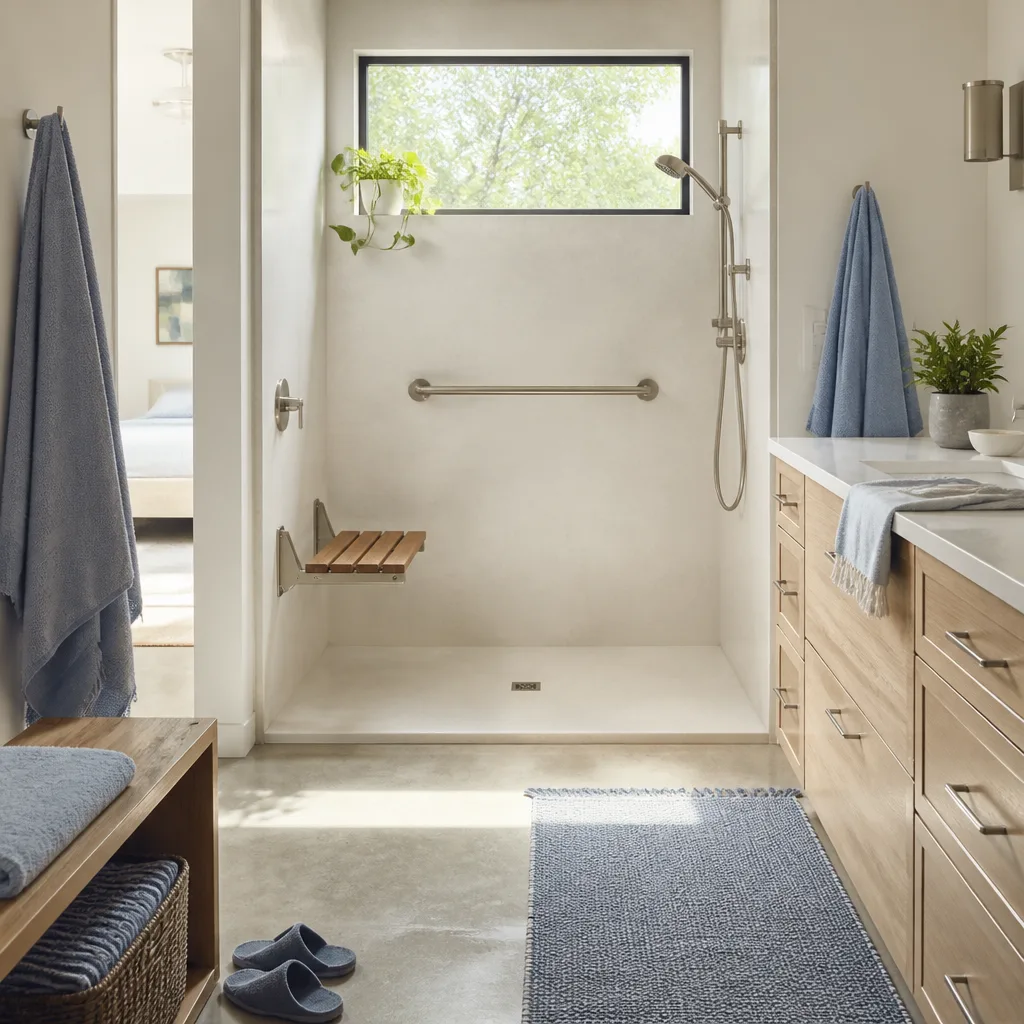
For homeowners planning ahead for accessibility, a zero-threshold or low-barrier walk-in shower is the standard recommendation. It supports aging in place without needing to redo the shower later, and it works the same way today for a resident who doesn’t have mobility concerns. Walk-in shower builds are a core part of what we do, not a side project we take on when nobody’s asking for a full remodel.
Common Mistakes to Avoid
- Bidding from a national cost guide. A Las Vegas project that starts from a $12,000 – $15,000 national average will come in 20% to 35% above that figure every time. The plan and the budget both have to start from Clark County numbers.
- Skipping the waterproofing upgrade to save $600. A tier-one waterproofing system is one of the cheapest insurance policies in the whole project. Skipping it in a hard water market where showers run daily means the failure happens sooner and the repair costs more than the upgrade ever would have.
- Putting tier-three fixtures in a tier-one bathroom. A Kohler or Toto fixture in a bathroom with thin tile, cheap lighting, and an old vanity reads as mismatched. Fixture upgrades pay off when the rest of the room is at the same level.
- Forgetting the Clark County permit. The permit is $300 – $900 depending on scope. Skipping it doesn’t save money – it defers it. Unpermitted plumbing and electrical can hold up a resale and complicate an insurance claim.
- Phasing in the wrong order. Aesthetic upgrades before waterproofing and rough-in means revisiting work already done. The order should run from failure risk to finish, not the other way around.
- Choosing standard finish for a hard water bathroom. Polished chrome against Las Vegas water builds visible mineral spots faster than a PVD finish. The PVD upgrade pays back in appearance and in not re-plating fixtures later.
- Treating a bathroom remodel like a general contracting project. When the bathroom is one item on a broad service menu, the subcontractors work on it once and move on. A bathroom specialist works on bathrooms and only bathrooms, and the process repeats instead of improvises.
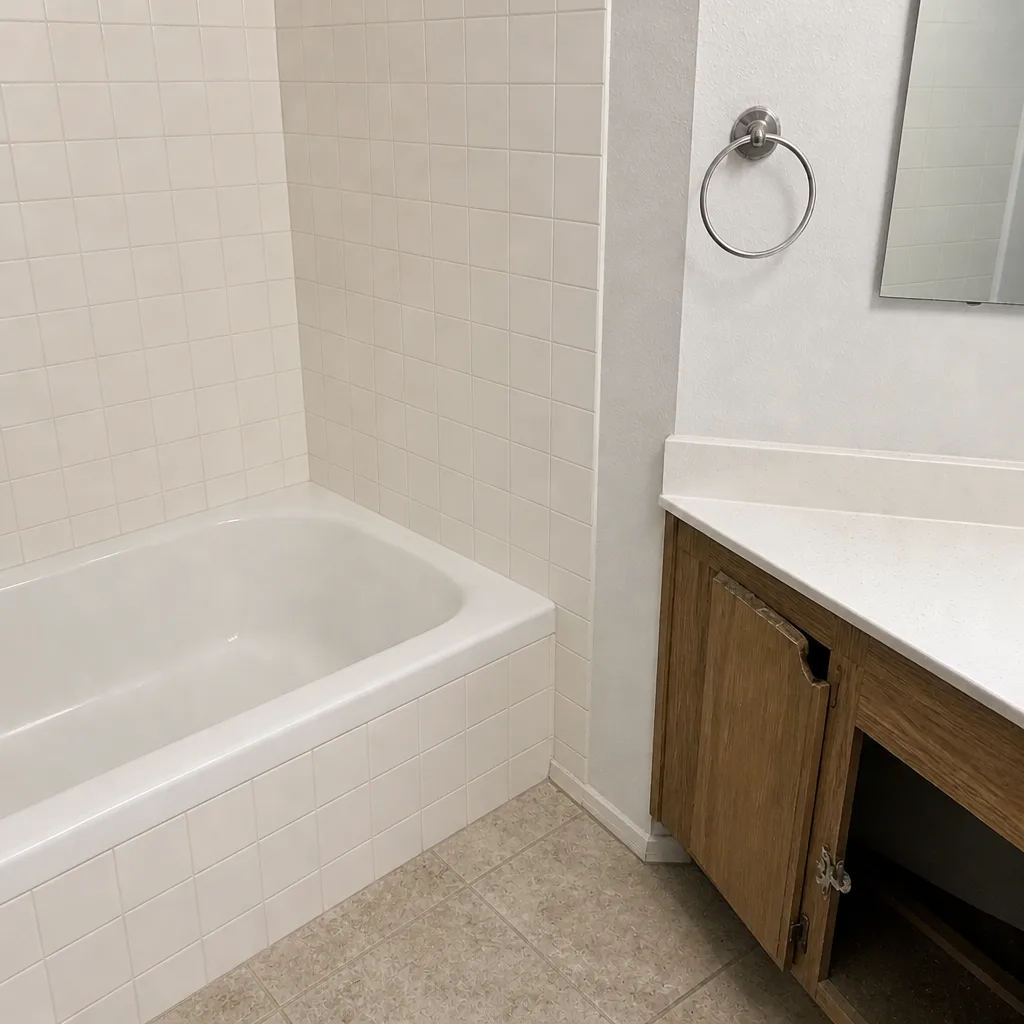
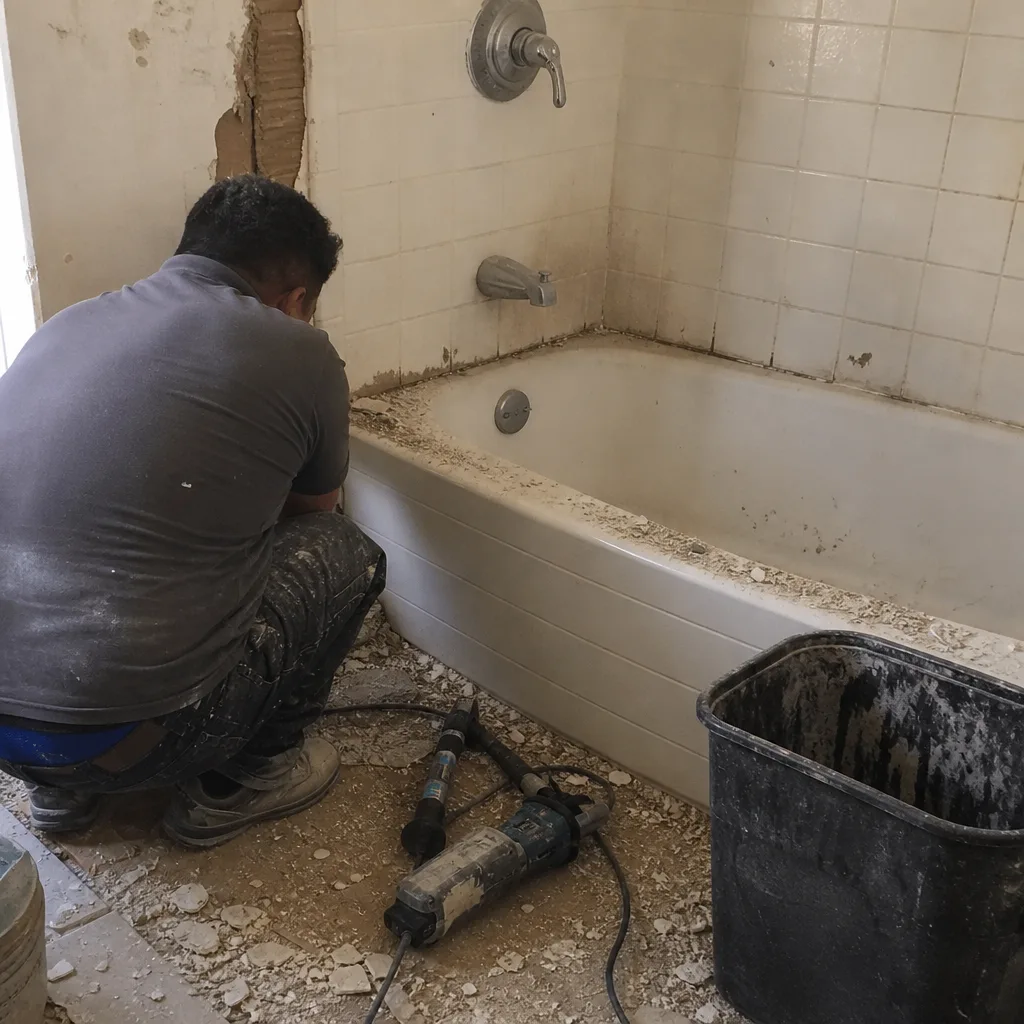
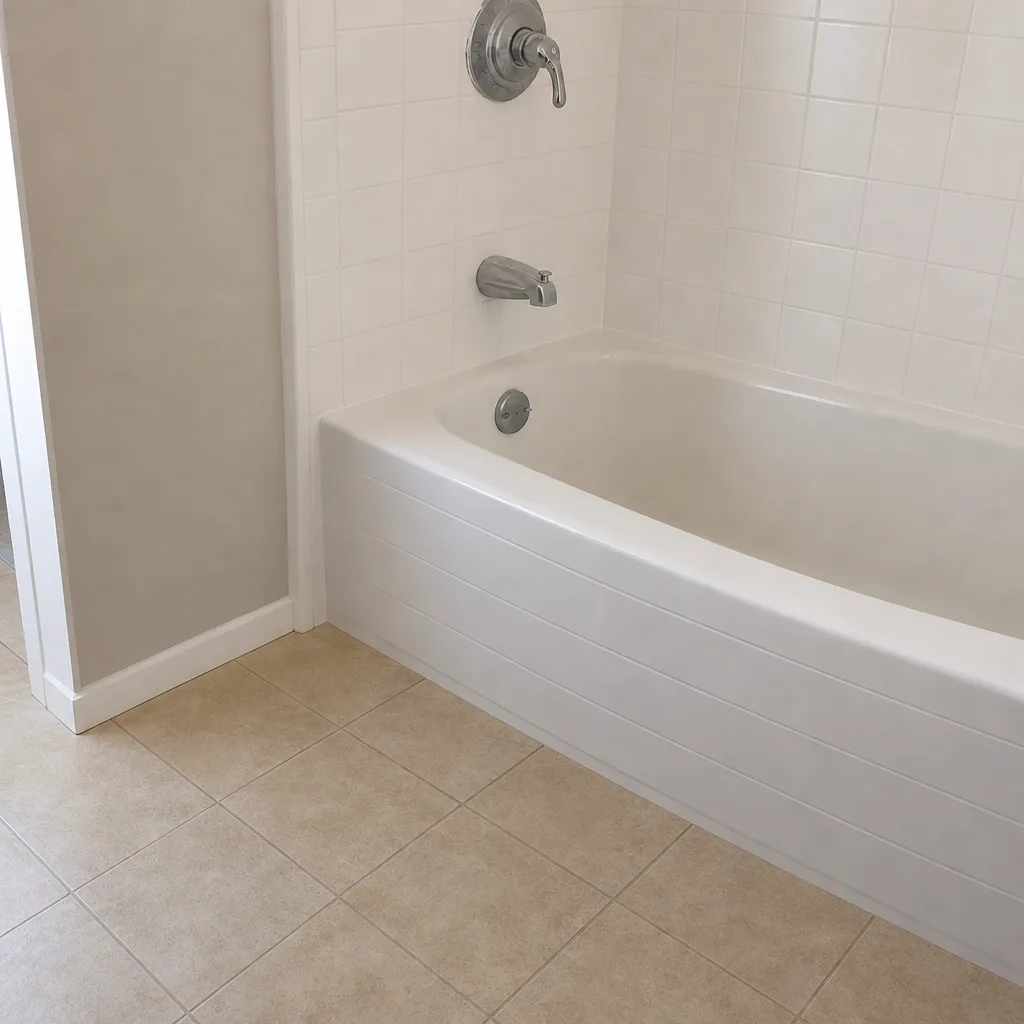
See the difference
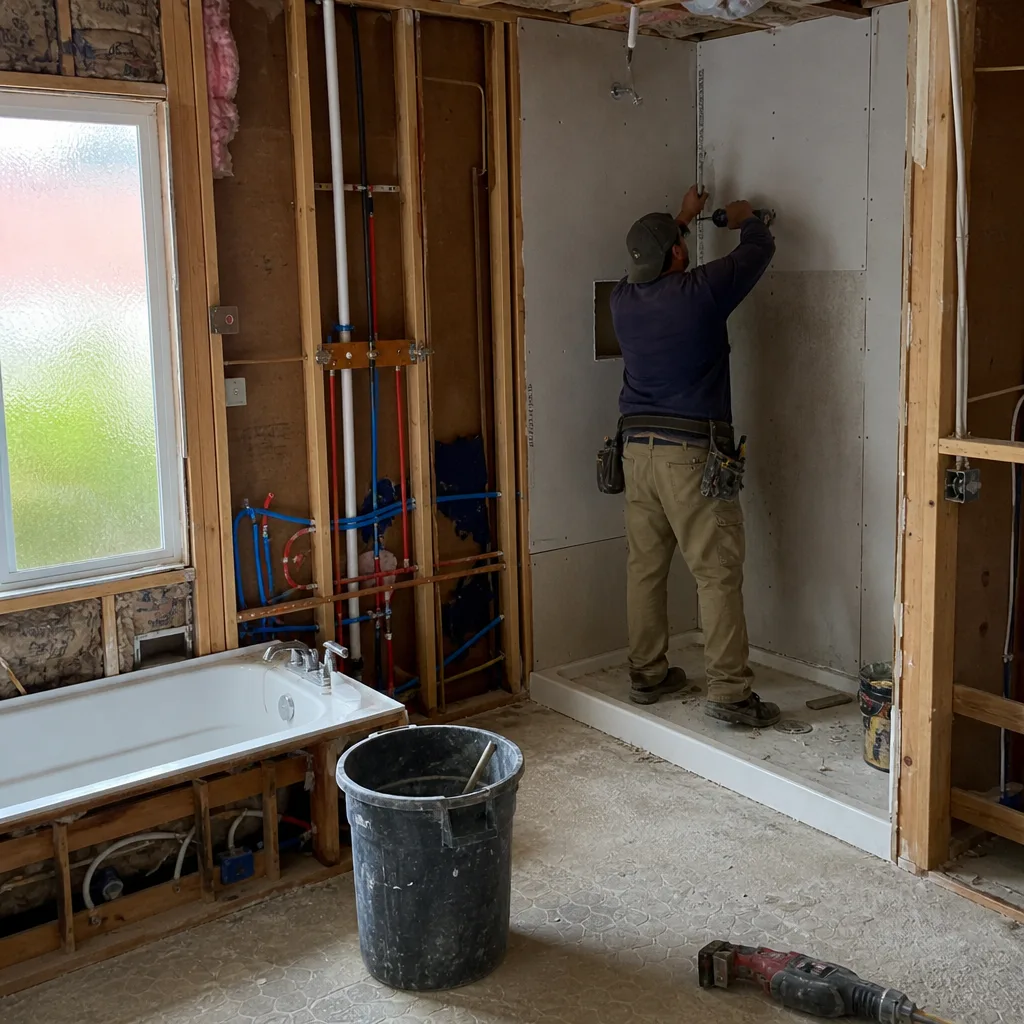
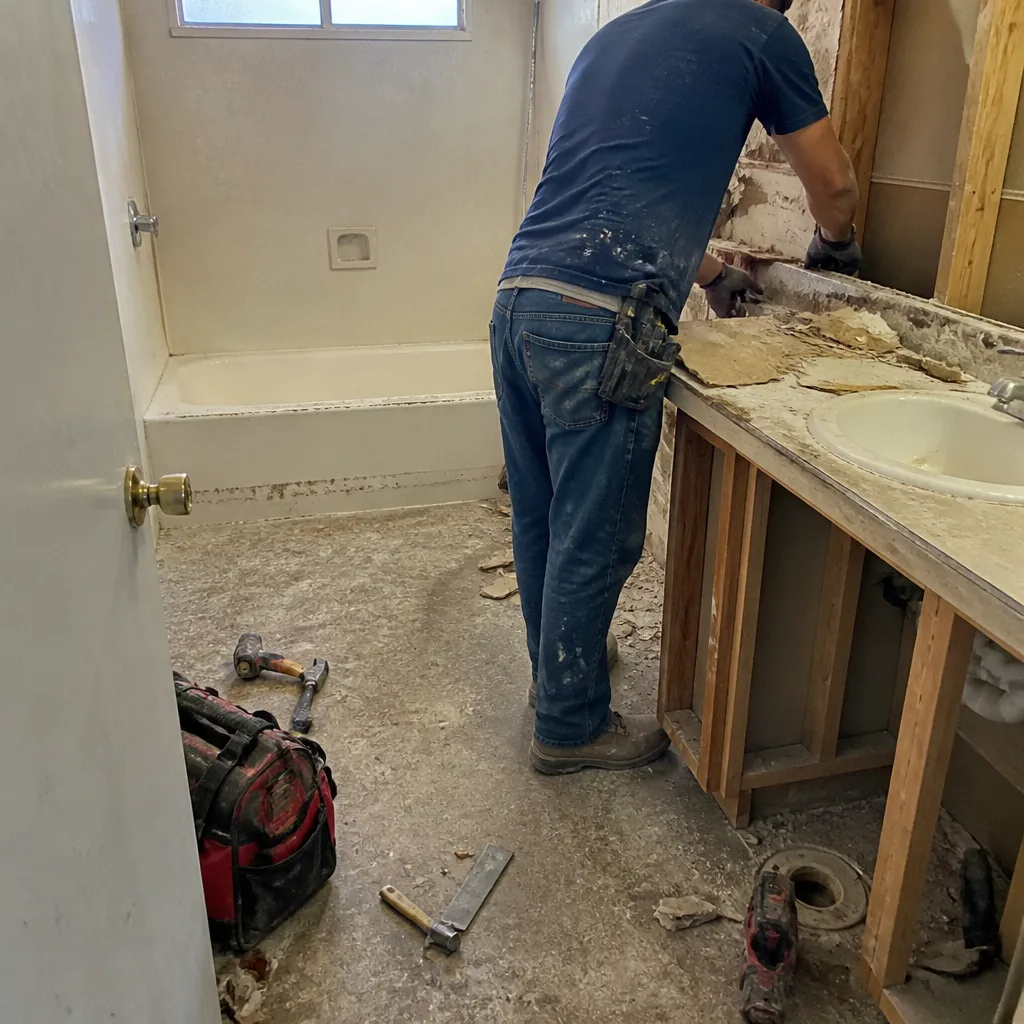 Before
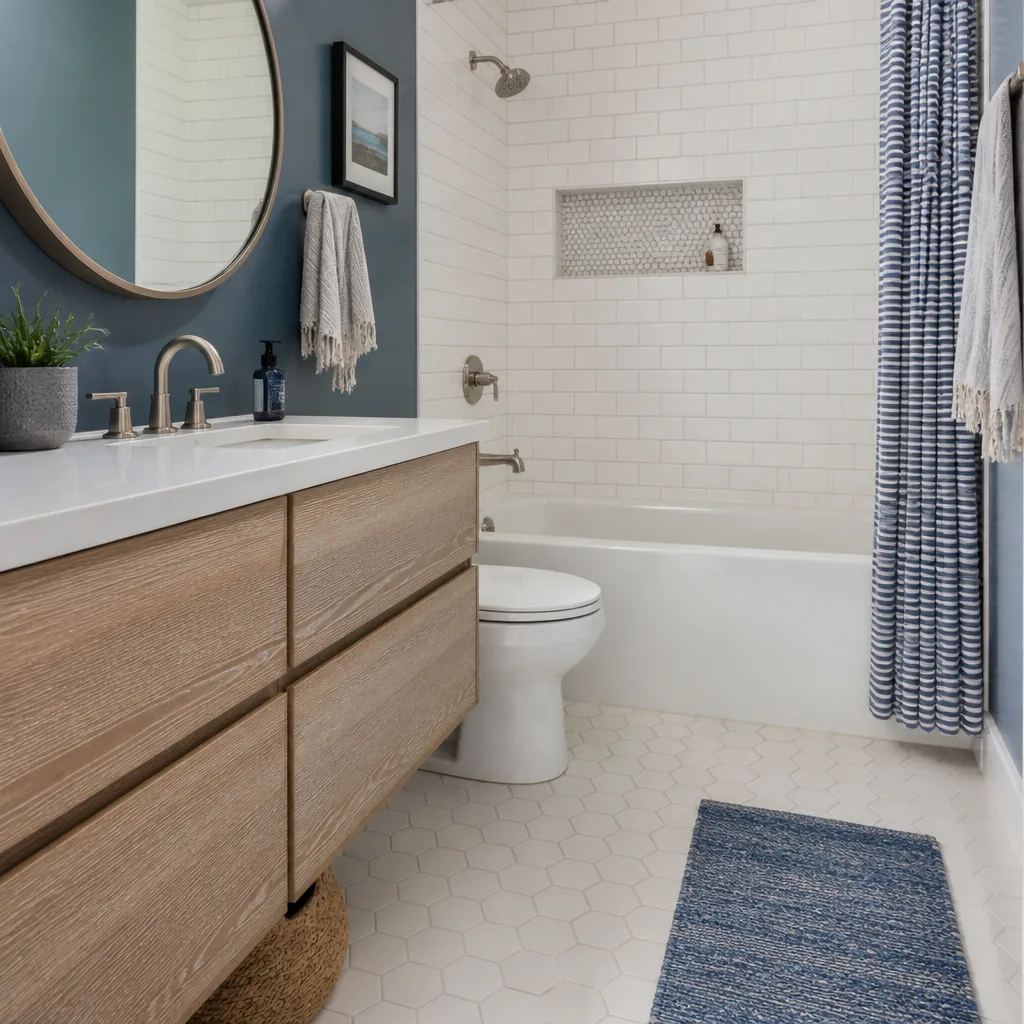
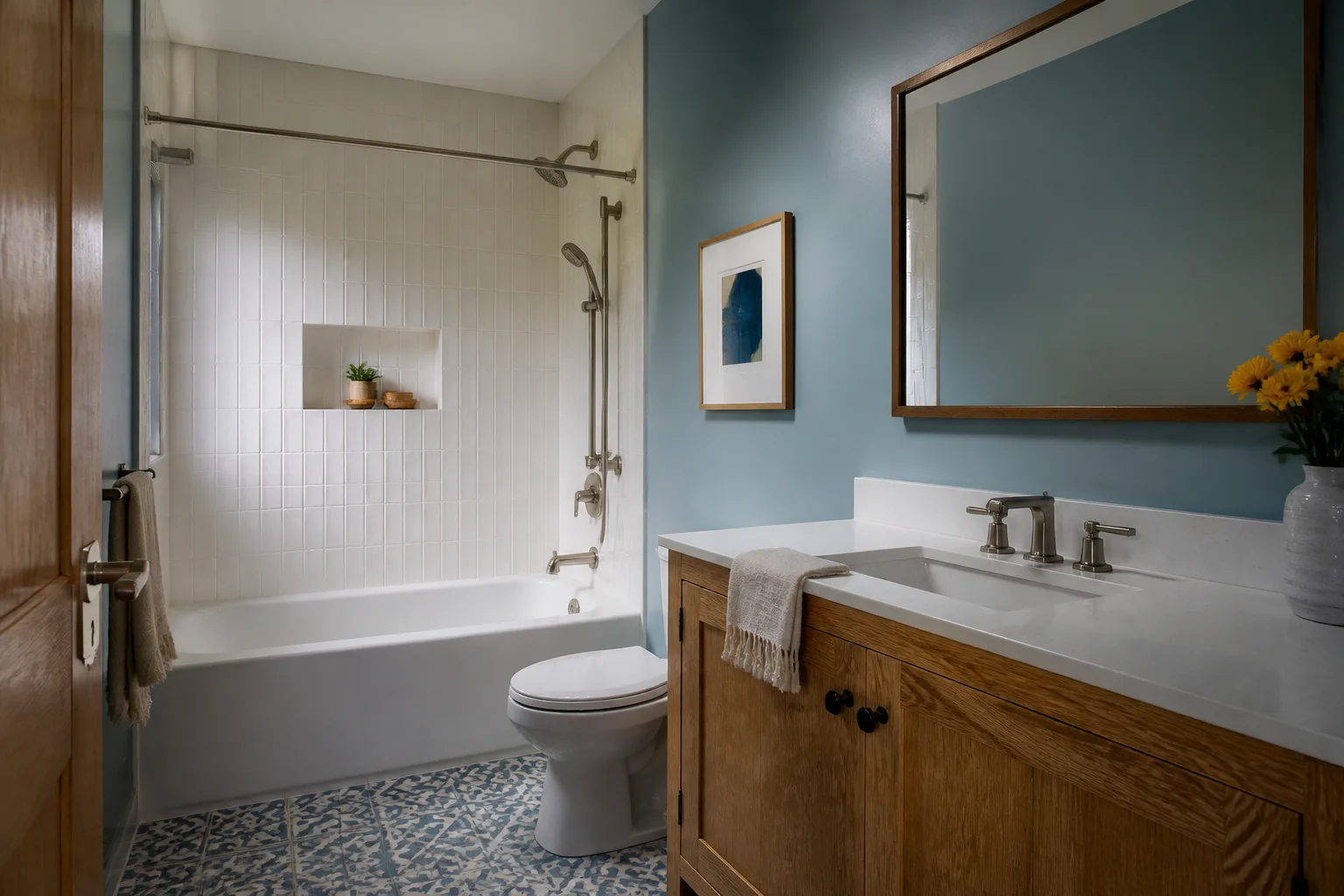
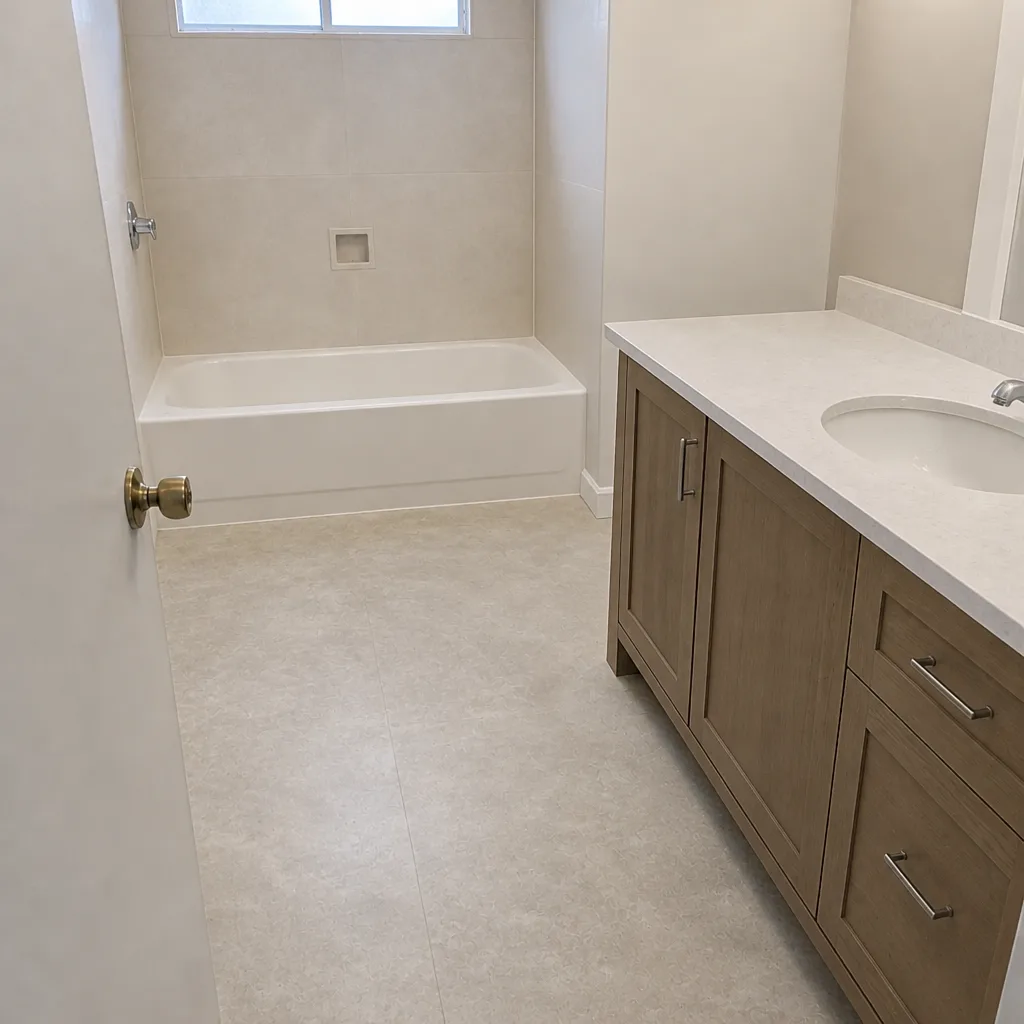 After
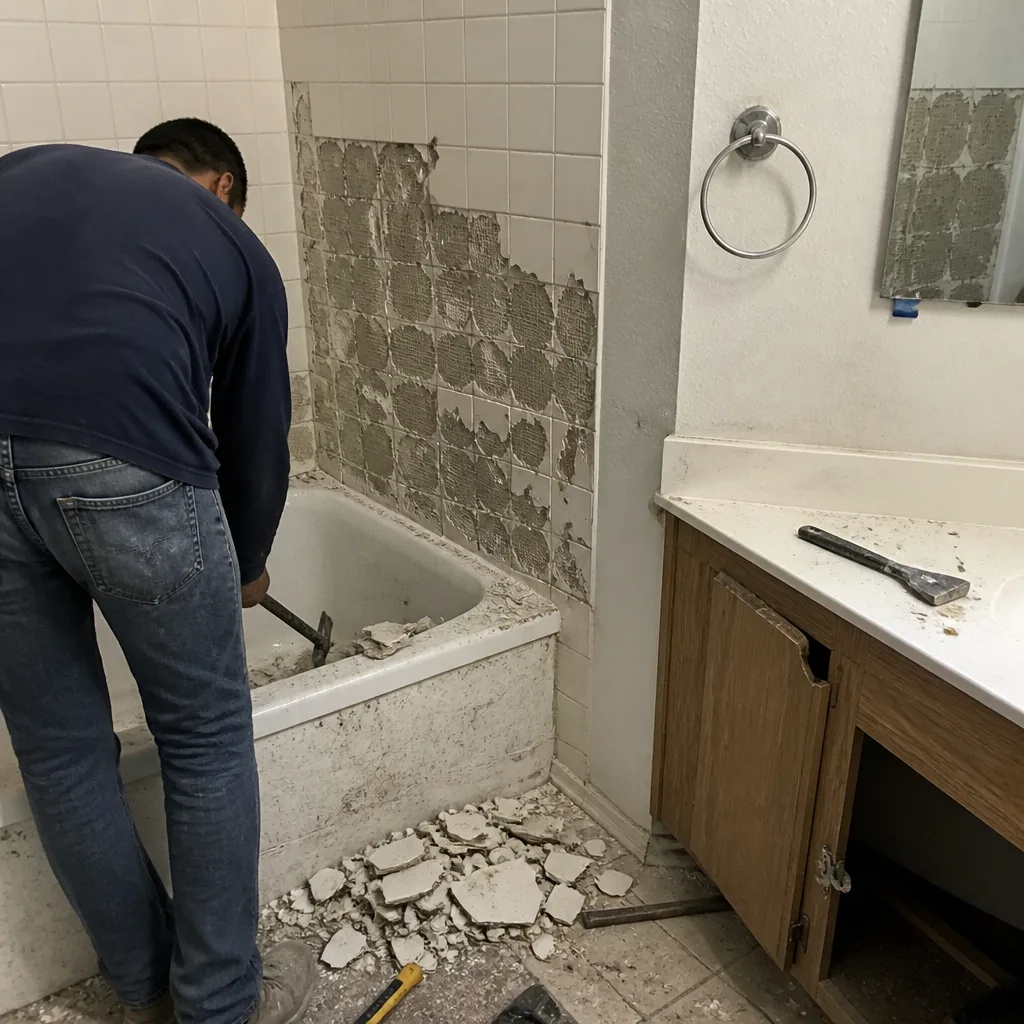 Before
 After
 Before
 After
When to Call a Professional
A few scenarios that shouldn’t wait: a shower pan that’s leaking into the ceiling below, a tub that’s failing at the drain or the surround, a valve that no longer holds temperature, or a floor with soft spots that suggest moisture has gotten underneath. Those are all cases where cosmetic fixes over the top of the problem make it more expensive, not less. Layout changes that move plumbing or electrical, walk-in shower builds, and anything that needs a permit in Clark County all need a licensed trade, and a general handyman is the wrong call for those.
The other common reason to call: you’ve decided this bathroom is finally getting done, and you don’t know where the real budget lands. That’s a planning conversation, not a sales conversation. Dayspring Bath Remodeling offers free estimates in Las Vegas – call (888) 393-8208. We answer 24/7. Fast dispatch from 7am to 7pm, Sunday through Friday.
Frequently Asked Questions
A mid-range full bathroom remodel in Las Vegas typically runs $16,000 – $28,000 in 2026, with cosmetic refreshes starting around $9,000 and premium walk-in shower builds reaching $30,000 and up. The variance comes from labor rates, hard-water-resistant material upgrades, Clark County permit fees ($300 – $900 depending on scope), and fixture tier. Call (888) 393-8208 for an exact quote – estimates are free.
Three structural reasons: Nevada licenses plumbers and electricians at the state level, which narrows the trade pool and pushes hourly rates higher than national databases assume; Las Vegas water is hard enough to require upgraded grout, sealers, and fixture finishes that a comparable project in Phoenix or Denver doesn’t need; and permit and inspection fees are real costs that national cost guides omit. Together these push local totals roughly 20% to 35% above the national mid-range figure.
No – the written estimate sets the final price. Any change is triggered only by a scope change you approve in writing, such as discovering hidden damage behind a wall that requires additional work. Nothing is added silently or as a change order at the end. Call (888) 393-8208 to schedule your free estimate.
Yes – permits are pulled and inspections are scheduled and passed as part of the project. The Clark County permit and inspection fees appear as a line in the written estimate. Pulling the permit is not a favor; it’s the reason the next owner’s inspector doesn’t find problems with your plumbing or electrical work.
A cosmetic refresh typically runs 1 – 2 weeks. A mid-range full remodel runs 3 – 5 weeks. A walk-in shower rebuild or a tub-to-shower conversion runs 2 – 3 weeks as a standalone. The variable that most affects timeline is tile complexity and whether plumbing has to be relocated to support a layout change.
For most homeowners planning to stay in the home, yes. A walk-in shower supports aging in place without needing to redo the shower later, and it holds its value in the Las Vegas resale market. It also solves a hard-water problem that a tub-shower surround struggles with, because a well-built walk-in has better drainage and easier cleaning. Typical standalone cost is $8,000 – $16,000.
The Bottom Line
The national average is a starting point, not a plan. In Las Vegas in 2026, real bathroom projects run from roughly $9,000 for a cosmetic refresh to $35,000 and up for a luxury primary bathroom, with labor, hard-water-resistant materials, Clark County permits, and fixture tier driving most of the spread. The right way to plan is to start from local numbers, choose fixture tier with intention, and phase work from failure risk outward rather than from aesthetics inward. One room, done to a standard that lasts, beats a bathroom redone twice.
Call (888) 393-8208 for a free estimate. We answer 24/7. Fast dispatch from 7am to 7pm, Sunday through Friday. The written, line-item estimate sets the final price, so you’ll know exactly where every dollar in your Las Vegas bathroom is going before work starts.
Written by the team at Dayspring Bath Remodeling.