Last updated November 18, 2026
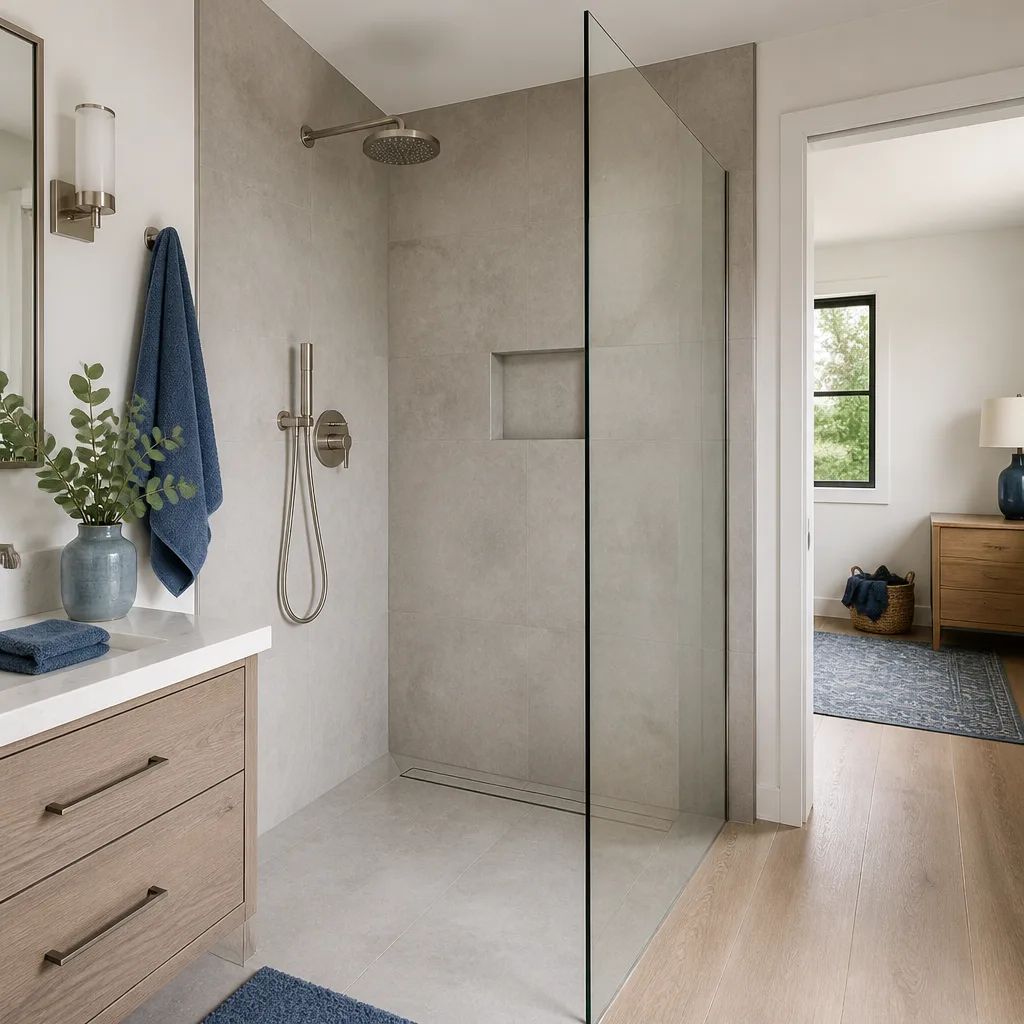

Free in-home design visit - walk-in showers, tub-to-shower conversions, and Kohler, Moen, and Delta fixtures planned to your exact space
DIY vs Professional Bathroom Remodeling: The Las Vegas Homeowner’s Decision Guide
Most homeowners frame this decision as a skill question. Can I set tile? Can I sweat a copper line? That framing misses what actually changes the outcome. In Las Vegas, the risk profile of self-managed bathroom work is shaped by a specific set of conditions: Nevada’s licensing rules for plumbing and electrical, slab-on-grade foundations that move with seasonal temperature swings, notoriously hard water, and summer heat that punishes the wrong materials. Some bathroom tasks are genuinely homeowner-appropriate. Others carry consequences that show up later, at inspection or resale. This guide draws the line clearly, and shows you where a hybrid approach makes sense for your Las Vegas home.
Quick Answer
In Las Vegas, you can legally and safely handle cosmetic bathroom work yourself, including paint, hardware swaps, mirror installation, and accessory replacement. Anything that touches plumbing supply lines, drain lines, electrical circuits, or the waterproofing envelope of a shower is best left to a licensed trade, both because Nevada requires it for permitted work and because hard water, slab movement, and extreme heat make shortcuts fail faster here than in most markets. A hybrid project, where you handle finishes and a specialist handles the wet work, usually delivers the best balance of cost and long-term reliability.
Styles & brands we work with
- Walk-in shower
- Tub-to-shower
- Freestanding tub
- Kohler
- Moen
- Delta
- Frameless glass
Table of Contents
- Where Nevada Draws the Legal Line on DIY Bathroom Work
- What You Can Genuinely DIY in a Las Vegas Bathroom
- Why Las Vegas Conditions Make Some DIY Jobs Disproportionately Risky
- The Warranty Problem With DIY Fixture Installation
- How a Hybrid Project Works (And How to Structure One)
- Comparing DIY and Professional Costs in Las Vegas
- A Decision Framework: Five Questions to Ask Yourself
Where Nevada Draws the Legal Line on DIY Bathroom Work
Nevada requires a licensed contractor for bathroom work that involves plumbing supply lines or electrical circuits. The homeowner exemption in Nevada law allows you to perform work on your own primary residence, but it comes with real limits: the work still needs to meet code, permits are still required where the local jurisdiction requires them, and the exemption does not extend to rental properties, flip projects, or work performed for compensation. In practical terms, a Las Vegas homeowner who pulls a permit and self-performs plumbing or electrical work is taking on the inspection liability personally, and an unpermitted condition discovered later can complicate a sale.
The boundary that matters most is between “finish work” and “systems work.” Finish work includes surfaces, trim, paint, and accessories. Systems work includes anything that carries water, drains water, or carries current. Here’s how that breaks down in a bathroom:
- Finish work (typically homeowner-appropriate): interior paint, cabinet hardware, towel bars, mirrors, vanity light fixture swaps where the wiring already exists and matches, caulking at the tub or vanity, and replacing a toilet seat.
- Systems work (needs a licensed trade): moving or extending a supply line, relocating a drain, installing a new shower valve, adding a GFCI circuit, running a new exhaust fan circuit, and any work inside the wall cavity.
- Envelope work (needs a waterproofing specialist): shower pan construction, tile backer installation, and the bonded waterproofing membrane under tile.
If you’re not sure which category your project falls into, that uncertainty itself is a signal to get a professional opinion before you open a wall. Our team at Dayspring Bath Remodeling walks Las Vegas homeowners through that boundary on every estimate call, because the cost of an unpermitted condition at resale is often higher than the cost of having the work done correctly the first time.
What You Can Genuinely DIY in a Las Vegas Bathroom
A confident Las Vegas homeowner can handle a meaningful list of bathroom improvements without touching a permit or voiding a warranty. These are the tasks where the material reality of a Las Vegas bathroom (hard water, dry air, intense sunlight through a window) doesn’t create compounding problems. Here’s the short list, with the caveat that matters for each:
- Interior paint. Use a bathroom-rated paint with a mold-resistant additive, and give it the full cure window before the shower runs again. Dry Las Vegas air helps paint cure faster, but it also means you should not skip the primer on fresh drywall.
- Hardware swaps. Cabinet pulls, towel bars, robe hooks, and shower curtain rods. Use the existing anchor points where you can; hard water staining around old hardware is a common surprise when you pull a fixture off the wall.
- Mirror installation. A framed mirror hung on the wall is homeowner-appropriate. A wall-to-wall glued mirror is not, because removing one without damaging drywall is more involved than installing the new one.
- Accessory replacement. Toilet paper holders, soap dishes, shower caddies, and light switch plates. Any fixture that mounts into tile needs a masonry bit and a careful hand, because drilling a tile can crack the glaze and leave a spot for hard water to work into.
- Caulk refresh. Re-caulking the tub-to-wall joint or vanity backsplash is a reasonable homeowner job, using a 100% silicone caulk rated for wet areas. In Las Vegas, caulk fails faster than in humid climates because the seasonal movement is larger and the water evaporates quickly, leaving mineral deposits behind.
Those five tasks alone can visibly refresh a Las Vegas bathroom for a modest material cost. What they can’t do is change the footprint, replace the shower, or fix a failing valve. Those need the deeper work a bathroom remodeling specialist handles, and the difference is where the project budget actually lives.
Why Las Vegas Conditions Make Some DIY Jobs Disproportionately Risky
Three local conditions make certain bathrooms jobs riskier in Las Vegas than the same job would be in a milder, softer-water market: slab foundations with seasonal movement, hard water with high mineral content, and extreme summer heat. Each one changes how a material or method performs, and each one turns a shortcut into a callback.
Tile setting on slab foundations
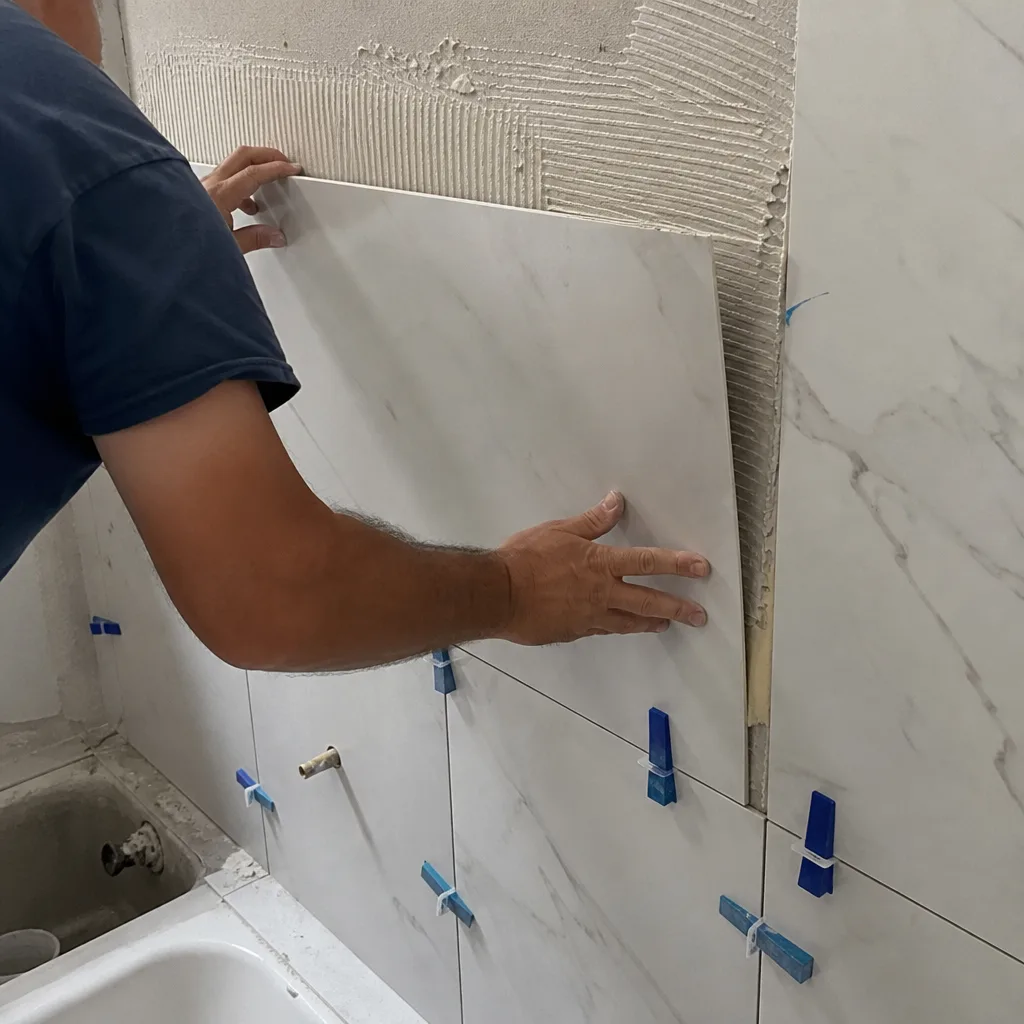
Most Las Vegas homes sit on slab-on-grade foundations, and that slab moves with the seasonal temperature swing. A tile installation on a slab needs a properly prepared substrate, the right thin-set for the substrate, and a layout that accounts for movement joints at the perimeter. A homeowner who anchors tile to a slab without understanding that movement pattern is likely to see cracked grout lines or a hollow-sounding tile within a few seasons. The failure doesn’t happen on install day, it happens quietly over a summer.
Grout selection without hard water knowledge
Las Vegas water is hard, and that changes how grout performs. Cementitious grout absorbs mineral deposits faster here, which is why epoxy grout and grout sealers get recommended more often than they would elsewhere. A homeowner choosing grout without accounting for that ends up with a shower that looks dingy in a year no matter how often it’s cleaned. Grout selection is one of the small decisions where local knowledge pays for itself.
Caulk choices in extreme heat
Caulk is not caulk. In Las Vegas, a big-box silicone that works well in a mild climate can fail along the top edge of a tub surround within a single summer because the heat cycling is larger and the material expands and contracts more. Choosing a caulk rated for high-movement joints and applying it with the correct backer rod is the difference between a joint that lasts and one that opens up by August.
Waterproofing under tile
The step most improvised shower builds skip is the waterproofing layer behind the tile. A bonded membrane system, like the ones Schluter Systems builds, is not an upsell: it’s the layer that keeps a slab-foundation shower from slowly leaking into the framing behind the wall. Our team treats waterproofing as the foundation of every walk in shower we build, because the tile above it is only as good as the membrane underneath.
The Warranty Problem With DIY Fixture Installation
Premium fixture warranties from Toto, Kohler, Grohe, and American Standard typically require professional installation to remain valid for the full term. When a homeowner installs a fixture themselves and something fails, the manufacturer’s warranty claim process commonly asks who performed the install and whether the fixture was installed to the manufacturer’s specification. Without that answer, you’re often limited to a parts replacement or a reduced claim. That’s a real cost most DIY budget comparisons miss.
The warranty angle matters most on the fixtures where the purchase price is highest. A Toto toilet or a Grohe shower valve is designed for years of service, and the warranty is part of what you’re paying for. A licensed professional installing to manufacturer spec keeps that warranty intact. A homeowner installing without a plumbing license often doesn’t.
This is one of the reasons our team works directly with eight fixture brands. We’re authorized to install Kohler, Moen, Delta, American Standard, Toto, Schluter, Sterling, and Grohe, and each of those carries a warranty process that expects a licensed installation. It’s also why our technicians recommend by fit and budget rather than steering toward one option. When you’re working with a bathroom-only specialist, the recommendation you get is grounded in what will actually last in your home, not in what’s easiest to install. Our technicians have up to 10 years of experience, and that experience shows up most clearly in the fixture selection conversation.
How a Hybrid Project Works (And How to Structure One)
A hybrid project is the sweet spot for a Las Vegas homeowner who wants to save on labor without taking on systems risk. The model is straightforward: you handle the finish and cosmetic work that carries no permit and no warranty exposure, and a licensed professional handles the wet work, electrical, and waterproofing. This isn’t a workaround; it’s how many of the most cost-efficient bathroom projects actually get built.
Here’s a proven structure for splitting the work:
- Start with a scoped estimate. Get a written, line-item estimate from a licensed professional that separates labor from materials. That line-item breakdown is what lets you identify which tasks to take on yourself.
- Hand off the systems work. Plumbing rough-in, new valve installation, electrical work, and the waterproofing membrane should be handled by the licensed trade. Nothing you do as a homeowner should touch these.
- Keep the finish work. Paint, hardware, mirror installation, and accessory swaps are all fair game for the homeowner. Plan them so they happen after the wet work is complete and the waterproofing has passed inspection, not before.
- Coordinate the handoffs deliberately. Make sure the professional knows which items you’re handling and when, so nobody is waiting on a paint color decision at the wrong stage of the project.
- Document the split. Keep a written record of what was professionally installed and what you handled yourself. That record is useful at resale and it protects the professional’s warranty on the fixture installation.
The hybrid approach works best when both sides are clear on scope from the first conversation. Our team is used to this structure, and we’re happy to write a line-item estimate that reflects a homeowner doing some of the finish work in parallel.
Comparing DIY and Professional Costs in Las Vegas
DIY looks cheaper on the surface and often isn’t once you account for tools, materials you only use once, warranty loss, and the chance of rework. Professional work looks more expensive until you price the failure that the professional was paid to prevent. Here’s how the two compare across the tasks that show up in nearly every Las Vegas bathroom project:
Where DIY saves real money
- Paint: the labor share of an interior bathroom paint job is significant, and this is a genuine DIY win.
- Hardware and accessory swaps: low material cost, low risk, no permit.
- Mirror and light fixture replacements (existing wiring): saves the labor on a small job.
- Caulk refresh: cheap materials, clear scope, and a well-known technique.
Where DIY costs more than it saves
- Tile installation on a slab: the rework rate is the cost. A tile install that fails within a few seasons costs more to fix than it did to install correctly.
- Shower waterproofing: the failure mode is hidden behind the tile, so a leak often shows up in adjacent framing long before it shows at the surface.
- Plumbing supply and drain work: permit and inspection requirements, plus the risk of creating an unpermitted condition at resale.
- Electrical: a bathroom circuit is required to be GFCI-protected, and the inspection pass depends on doing it correctly.
- Fixture installation on premium brands: the warranty loss alone often exceeds the labor savings.
Below is a rough comparison of the labor you typically pay for versus the labor you can realistically absorb. Actual numbers depend on your home, your vision, and the trades involved, so we set our pricing per job by written estimate after seeing the space.
- Paint (labor portion): homeowner-absorbable with confidence
- Hardware and accessories: homeowner-absorbable
- Mirror and light fixture swap (existing wiring): homeowner-absorbable
- Caulk refresh: homeowner-absorbable
- Tile setting and substrate: professional labor, proportional to rework risk
- Waterproofing membrane: professional labor, the hidden cost of the whole shower
- Shower valve and rough-in plumbing: licensed professional
- Electrical and exhaust fan circuit: licensed professional
- Premium fixture installation: professionally installed to preserve warranty
If you’re sitting in a Las Vegas home near Summerlin or Green Valley with a bathroom that was last touched before you moved in, the honest answer is that most of the labor is in the systems work, not the paint. A free estimate is where that gets clarified. Call (888) 393-8208. We answer 24/7. Fast dispatch from 7am to 7pm, Sunday through Friday.
A Decision Framework: Five Questions to Ask Yourself
Before you decide to DIY or hire, walk through these five questions. They cover the same ground a professional walks through on an estimate call, and they’ll tell you quickly which tasks belong in your column and which belong in the professional’s.
- Does this task require a permit in my jurisdiction? If the answer is yes, or if you’re not sure, that’s a professional task. Permits exist because inspections catch the failure modes that aren’t visible on install day.
- Does it touch a water line, a drain line, or an electrical circuit? Systems work belongs with a licensed trade. Finish work can belong with you.
- Am I changing the waterproofing envelope? Anything under the tile is professional territory. Anything on top of the tile is often fair game.
- Am I installing a fixture with a warranty I want to keep? If the warranty matters, the installation needs to be performed by a licensed plumber.
- Would a failure be visible or hidden? Visible failures (peeling paint, a crooked mirror) are low-stakes. Hidden failures (a shower leak into a wall cavity) are the ones to prevent with professional execution.
Any Las Vegas homeowner who answered “yes” to questions one, two, three, or four has a project that belongs at least partly with a licensed professional. That answer holds regardless of how confident you are. The Las Vegas specific conditions we walked through above (slab movement, hard water, extreme heat) all make the “hidden failure” category larger than it looks from a weekend DIY plan.
Common Mistakes to Avoid
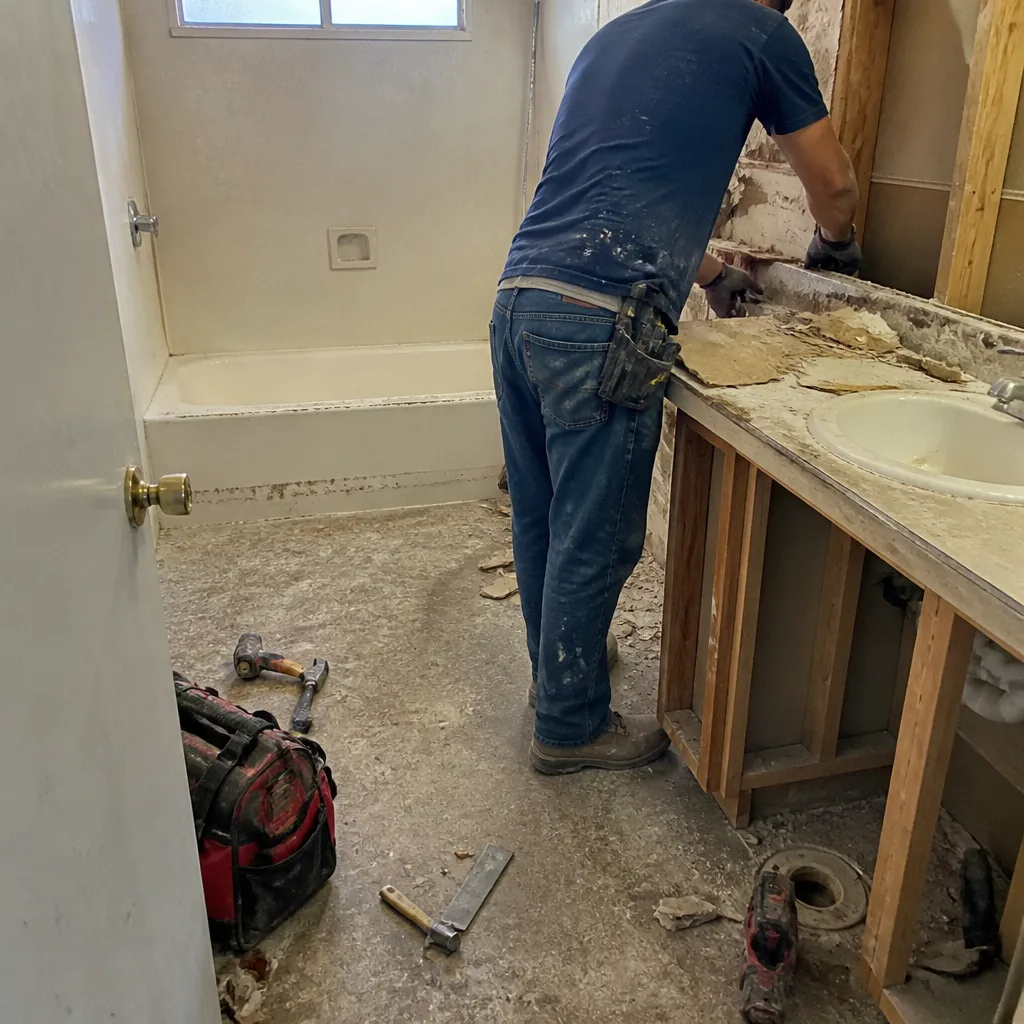
- Opening a wall before understanding the permit picture. A homeowner who opens the vanity wall to “see what’s behind it” has created a discovery that affects the permit and inspection timeline. Get the scope of work defined before demolition starts.
- Choosing grout without factoring in Las Vegas hard water. Cementitious grout alone will stain and absorb minerals much faster here. Epoxy grout and a proper sealer are not an upsell in this market.
- Assuming a new fixture carries the same warranty if you install it. Toto, Kohler, Grohe, and American Standard all expect licensed installation for full warranty coverage. Read the terms before you buy the box.
- Installing a shower without a bonded waterproofing membrane. Skipping the membrane is the single most common shortcut a homeowner makes. It works fine in the first season and fails by the third.
- Using caulk rated for a bedroom ceiling on a shower joint. Las Vegas heat cycling forces a high-movement caulk. A generic tube from the paint aisle will crack by the first summer.
- Doing the electrical on a DIY budget without a GFCI plan. A bathroom circuit needs GFCI protection, and inspection will fail the project without it. Hire the electrician and keep the framing.
- Painting and caulking before the professional’s rough-in is finished. Sequence matters. Finish work happens after the wet work is done, inspected, and cured. Doing it out of order means redoing it.
See the difference
 Before
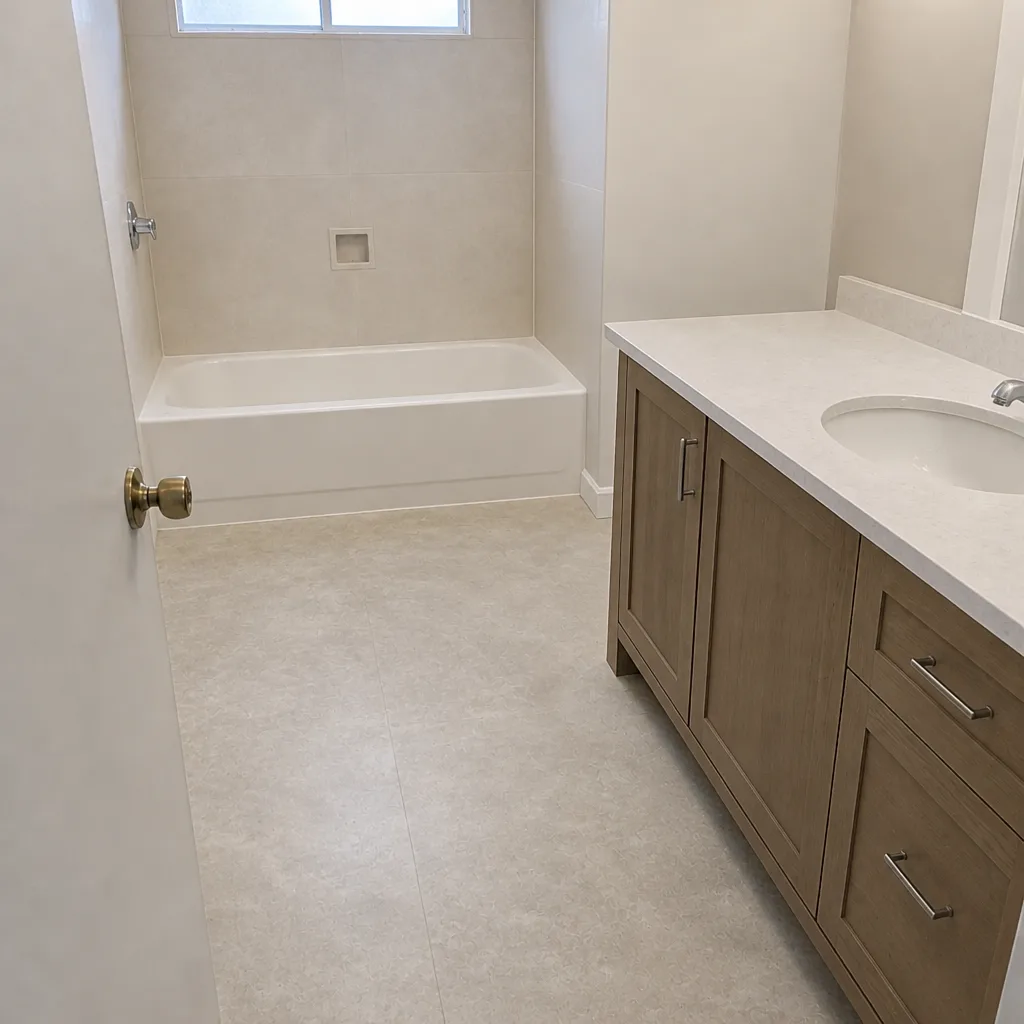 After
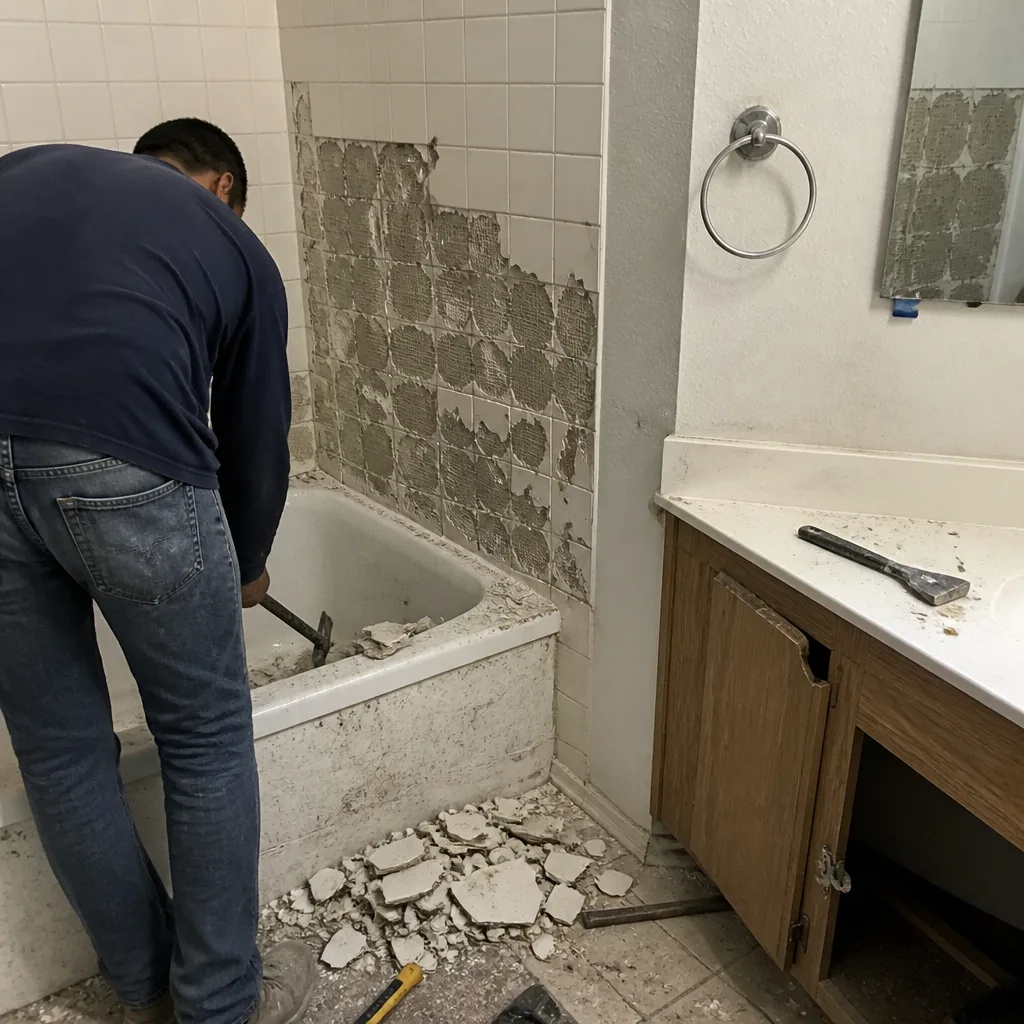 Before
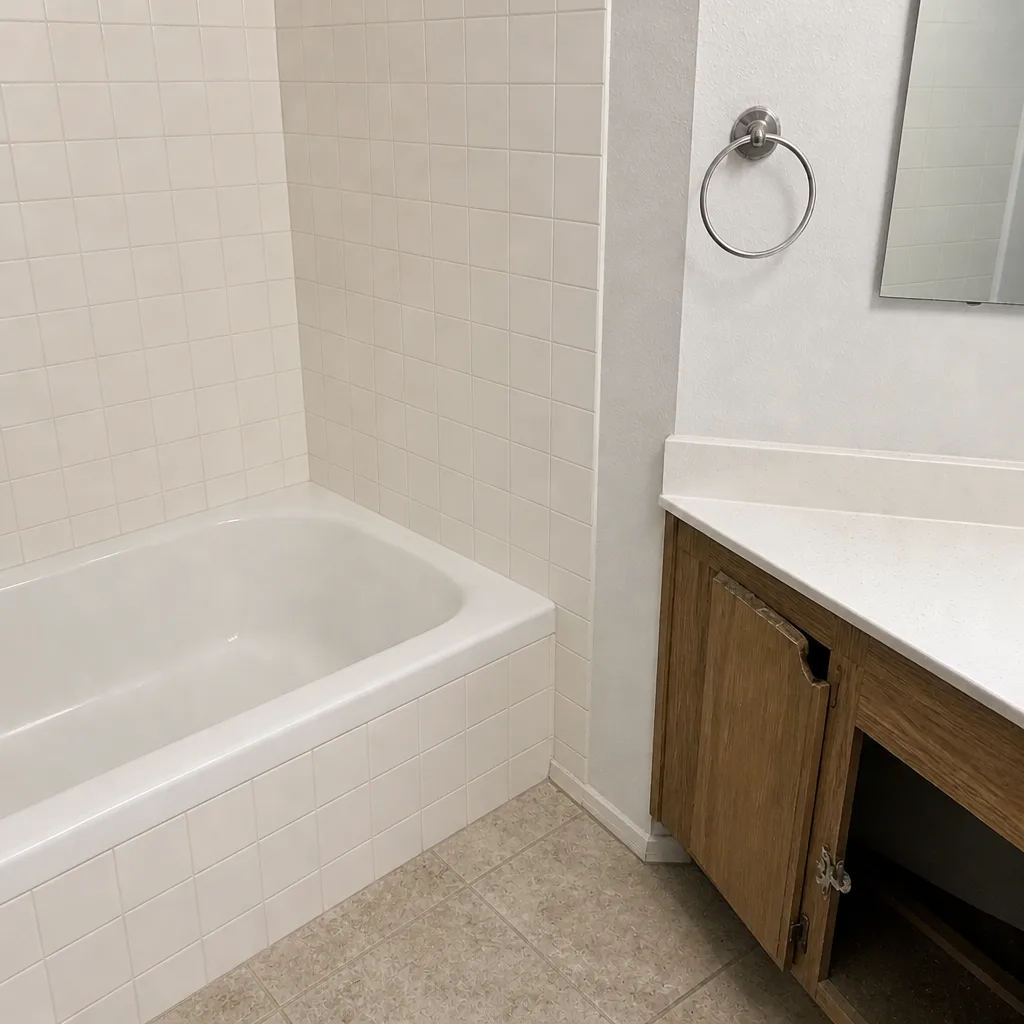 After
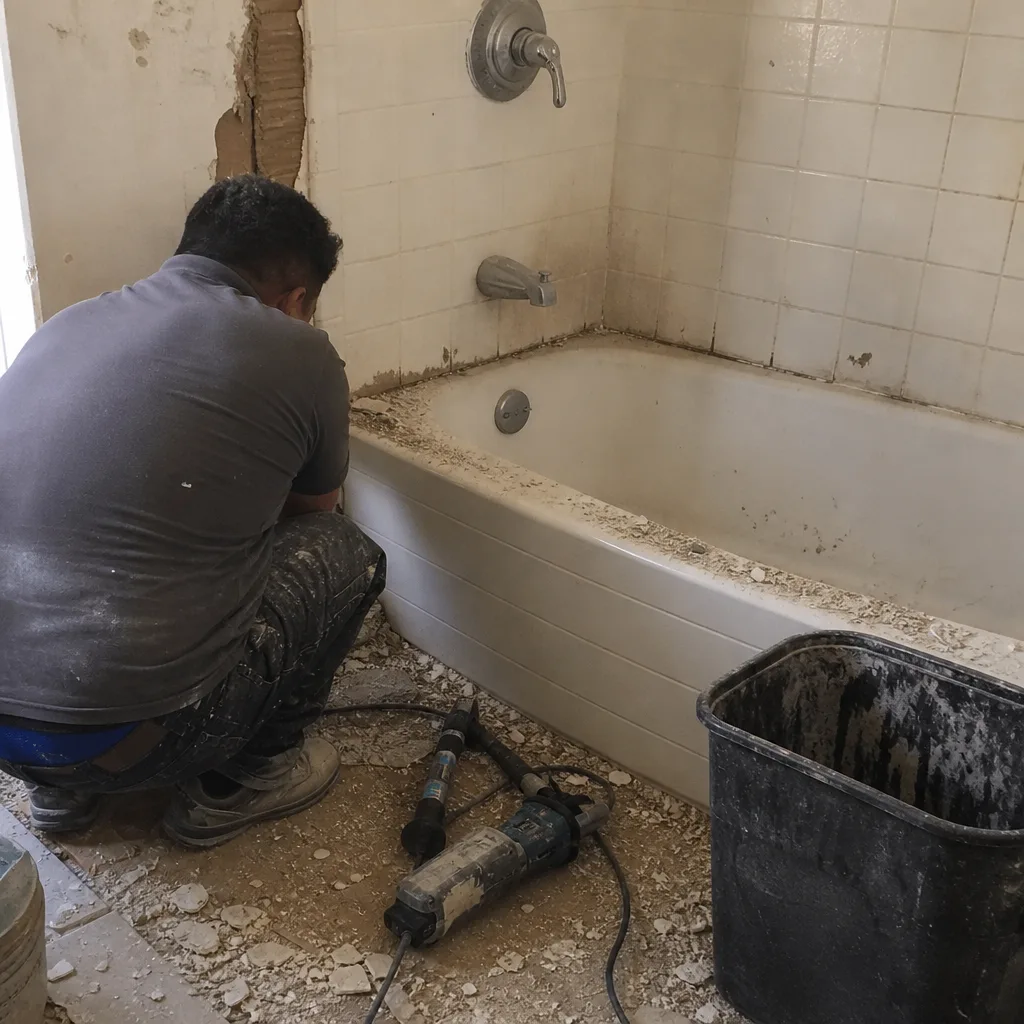 Before
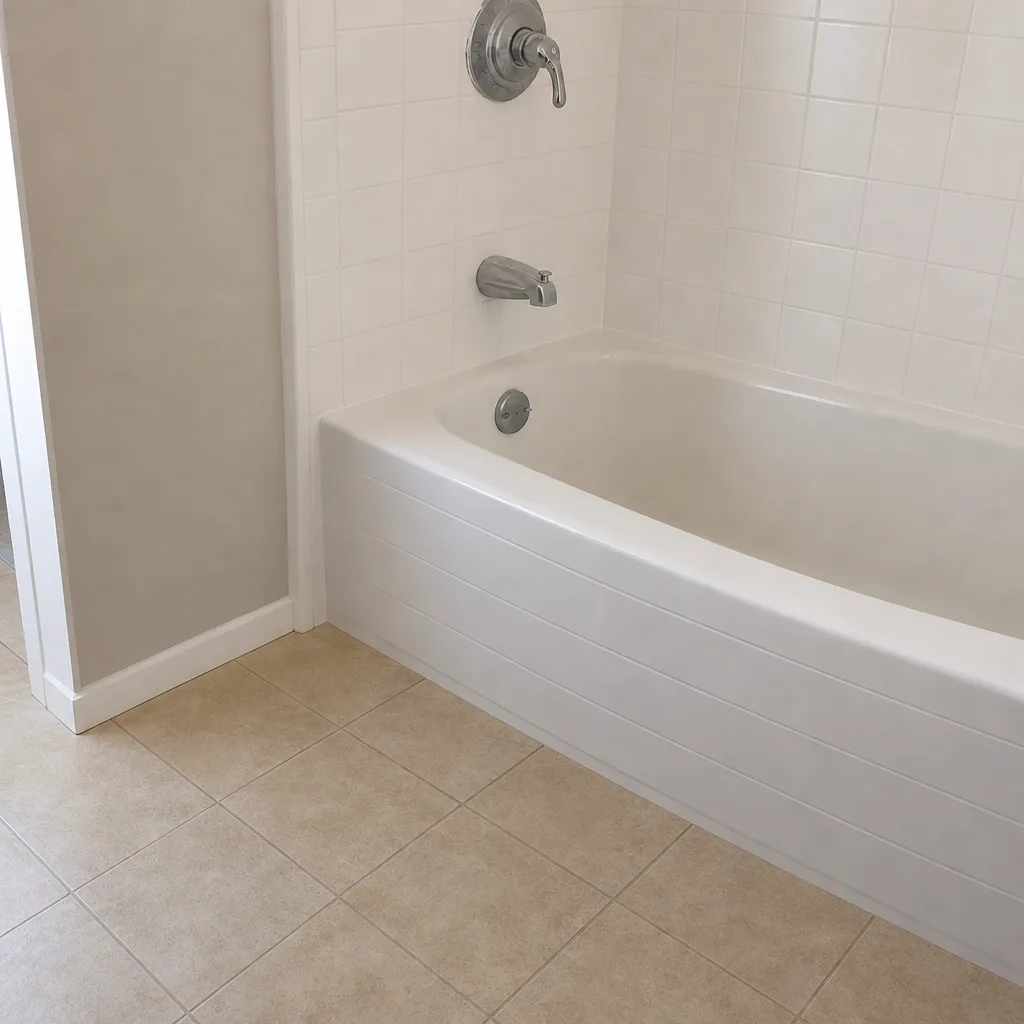 After
When to Call a Professional
Call a professional the moment your Las Vegas bathroom project involves moving a drain, adding a shower valve, running a new electrical circuit, or rebuilding a shower pan. Call when you’re installing a premium fixture and want the warranty to hold. Call when the tile on a slab foundation is part of the scope, and call when a hybrid project needs a properly line-itemed estimate that separates the finish work you’re doing from the wet work that needs a licensed trade. A bathroom-only specialist sees the failure modes that show up repeatedly in this market, which is why our team at Dayspring Bath Remodeling offers free estimates in Las Vegas. Call (888) 393-8208 and we’ll walk through your project before you commit to a scope. We answer 24/7. Fast dispatch from 7am to 7pm, Sunday through Friday.
Frequently Asked Questions
In most cases, no, if the work touches supply or drain lines. Nevada requires a licensed contractor for bathroom work that involves plumbing supply lines or electrical, and the homeowner exemption in Nevada law is narrow. It allows work on your own primary residence but does not exempt you from permit or inspection requirements, and it does not extend to rental properties or compensated work. If your project includes moving a drain or extending a supply line, plan to hire a licensed plumber. Call (888) 393-8208 for an exact quote, estimates are free.
Paint, hardware swaps, mirror installation, light fixture swaps where the wiring already exists and matches, accessory replacement, and caulk refresh are the homeowner-appropriate tasks. Each one still has a Las Vegas caveat: use a bathroom-rated paint, use 100% silicone caulk, expect hard water staining around old hardware, and use a masonry bit carefully on tile. These tasks genuinely reduce the total project cost when they’re handled in parallel with the professional work. Call (888) 393-8208 to get a line-item estimate so you can see where to split the scope.
It can, and often does. Premium fixture warranties from Kohler, Toto, Grohe, and American Standard typically require professional installation to remain valid for the full term. When a claim is filed, the manufacturer commonly asks who performed the installation and whether it was done to spec. A homeowner installation usually limits the claim to a parts replacement or a reduced amount. If the warranty is part of what you’re paying for, have the fixture installed by a licensed plumber. Call (888) 393-8208 to schedule installation with a professional estimate.
Slab-on-grade foundations in Las Vegas move with the seasonal temperature swing, and a tile installation that doesn’t account for that movement develops cracked grout lines or hollow tile within a few seasons. The right substrate, the right thin-set, and proper movement joints at the perimeter are what prevent that. Improvised installs work fine for a year and then need rework, which usually costs more than having it done correctly the first time. A free estimate from a bathroom specialist will tell you whether your existing slab is ready for tile. Call (888) 393-8208.
Hard water increases how fast grout absorbs mineral deposits and stains, which makes epoxy grout and proper sealing more important here than in soft-water markets. Caulk is affected by heat cycling more than by water itself: a shower joint in Las Vegas sees larger temperature swings than in milder climates, so high-movement caulk and a correct backer rod are what keep the joint from opening. These are small decisions that determine whether the shower looks new in five years or dingy in two. Call (888) 393-8208 for a free estimate on a professionally rebuilt shower.
Yes, when it’s structured correctly. A hybrid project that has the homeowner handling paint, hardware, mirror installation, accessories, and caulk, while a licensed professional handles plumbing, electrical, and waterproofing, reduces total cost without creating permit or warranty complications. The structure that makes it work is a line-item estimate that clearly separates the two scopes, and a written handoff plan so timing doesn’t get in the way of the wet work. Call (888) 393-8208 to set up the estimate that gets this conversation started.
The Bottom Line
The DIY vs professional decision in Las Vegas isn’t about your confidence level. It’s about which tasks carry permit, warranty, or waterproofing exposure in this specific market. Paint, hardware, mirrors, accessories, and caulk belong with the confident homeowner. Tile setting on slab, waterproofing membranes, plumbing supply and drain work, electrical, and premium fixture installation belong with a licensed specialist. A hybrid project that keeps the finish work with you and the wet work with a professional is the most cost-efficient structure, and it’s the one that preserves the warranty on premium fixtures like Toto, Kohler, Grohe, and American Standard. If you’re ready to scope your project, call (888) 393-8208 for a free estimate. We answer 24/7. Fast dispatch from 7am to 7pm, Sunday through Friday.
Written by the team at Dayspring Bath Remodeling.