Last updated November 18, 2026







Free in-home design visit - walk-in showers, tub-to-shower conversions, and Kohler, Moen, and Delta fixtures planned to your exact space
Bathroom Remodeling Emergency Preparedness Guide for Las Vegas Homes
Most homeowners plan a bathroom remodel around tile, fixtures, and finishes. The planning that actually protects your investment happens before the first wall opens: knowing where your water shutoff is, how your open bathroom handles a monsoon downpour, and what your insurance policy does and doesn’t cover while work is underway. Las Vegas gets about 4 inches of rain a year, but that rain can arrive as an inch in under 30 minutes. A bathroom with open walls and no weather barrier is one of the most exposed structures in the neighborhood when that happens. This guide walks through what to prepare before demolition, what to do in the first 20 minutes of a failure, how to document a remodel in progress, and how to recover afterward.
Quick Answer
Bathroom remodeling emergency preparedness in Las Vegas means doing four things before demolition: locating and testing your main water shutoff, protecting open walls and subfloor against monsoon intrusion, replacing aging supply lines early in the project, and photographing and documenting the bathroom and your contractor agreement for insurance purposes. When a failure happens, shutting off water within the first few minutes matters more than anything else. Everything below is built around those priorities.
Styles & brands we work with
- Walk-in shower
- Tub-to-shower
- Freestanding tub
- Kohler
- Moen
- Delta
- Frameless glass
Table of Contents
- Water Shutoff Preparedness Before Any Remodel Begins
- Securing a Mid-Remodel Bathroom Against Monsoon Intrusion
- What to Do in the First 20 Minutes of a Supply Line Failure
- Why Supply Line Replacement Belongs Early in the Project
- Documenting a Remodel in Progress for Insurance in Nevada
- Post-Emergency Recovery: What to Save, What to Replace
- What Our Experience in Las Vegas Bathrooms Has Taught Us
Water Shutoff Preparedness Before Any Remodel Begins
Before a single tile is pried loose, every member of the household should be able to shut off the water to the bathroom and to the whole house. In our experience, a surprising number of homeowners have never touched their main valve. That changes today.
- Find the main shutoff. It’s usually where the water line enters the home, often in a garage, utility closet, or exterior wall box. In Las Vegas homes, that’s commonly near the front of the house or in a side yard.
- Find the bathroom’s isolation valve. Many bathrooms have a local shutoff under the sink or in the wall behind the toilet. If yours doesn’t, note that in your planning.
- Test the main valve. Close it, open a faucet, and confirm the water stops. Then open it back up. A valve that hasn’t moved in years can stick or fail when you need it most.
- Tag and label. A bright tag on the valve saves seconds during a failure. Seconds matter.
- Tell everyone. Every adult in the home should know where the valve is and how to turn it.
If the main valve won’t close fully or feels brittle, get it replaced before demolition starts. That’s a small job that prevents a much larger one. Replacing an aging main valve and the supply lines feeding the bathroom early in the schedule keeps the riskiest water components out of the equation while walls are open. If you’re planning bathroom remodeling anywhere in Las Vegas, this step alone can save you from the worst version of a bad day.
Securing a Mid-Remodel Bathroom Against Monsoon Intrusion
Las Vegas averages about 4 inches of rain per year, and that’s why the monsoon catches people off guard. The rain comes in bursts. A bathroom with the drywall peeled back, no window protection, and bare subfloor is essentially a bucket waiting for a storm. Here’s how to prepare.
- Temporary weather barriers: Any exterior window or vent opening in the work zone needs plastic sheeting and taped seams during the project. Your remodeler should have a plan for sealing openings every evening the job sits idle.
- Drain protection: A floor drain or open shower drain can back up silt and storm runoff into the bathroom if water enters the room. Cover drains with a filter cap during construction phases.
- Subfloor moisture prevention: Exposed subfloor and framing should be covered with a breathable or water-resistant barrier between work days. A tarp on the ground outside the window helps too.
- Roof and flashing checks: Before an open-wall phase begins, walk the exterior. Gutters that dump next to the foundation or missing flashing above the bathroom window are the likely first entry point for monsoon water.
Talk with your remodeler about a storm plan before work begins. In Las Vegas, the conversation often feels unnecessary in June and essential by August. It’s the kind of detail that separates a walk in shower project that goes smoothly from one that gets a costly interruption.
What to Do in the First 20 Minutes of a Supply Line Failure
A supply line failure during active remodeling escalates quickly. Water sprays at pressure, travels along framing, and starts soaking drywall from the inside. The first few minutes matter more than the next few hours. Here’s the order of operations.
- Shut off the water. Main valve first, then the bathroom’s isolation valve if you can reach it. Don’t try to stop the spray with your hands.
- Kill power to the bathroom at the breaker panel if water is near outlets, fixtures, or wiring. Electricity and standing water don’t mix.
- Call your remodeler and your water provider. Give them the situation in plain terms: what failed, where, and how much water is moving.
- Contain and document. Towels, buckets, and a wet/dry vacuum if you have one. Take photos before cleaning anything up. Documentation matters for insurance.
- Move valuable items out. If your remodel has fixtures or materials on site, move them away from the water. Don’t walk through standing water near electrical fixtures to do it.
Once water is off and power is safe, call (888) 393-8208. We answer 24/7. Fast dispatch from 7am to 7pm, Sunday through Friday. A trained technician can assess what the water reached and what needs to dry before work resumes.
Why Supply Line Replacement Belongs Early in the Project
Supply lines and shutoff valves are the cheapest components in a bathroom and the most likely to fail. Replacing them early in a remodel sequence means the open-wall phase is done without aging plumbing running through it.
The early-project sequence we recommend
- Inspect all supply lines, angle stops, and the shower valve body.
- Replace flexible supply lines and angle stops on every fixture being retained.
- Pressure-test before walls close. A 24-hour test under house pressure catches pinhole leaks that only show up when walls are covered.
- Replace the shower and tub valve if it’s more than a decade old.
- Install accessible shutoff valves for the new fixtures.
This sequence costs less than almost any other part of the project, and it’s a hard stop against the worst kind of late-stage failure. When we connect a Las Vegas homeowner with a vetted local pro, pressure-testing before walls close is always on the checklist. So is the waterproofing behind the tile, which is why a proper build uses Schluter Systems detailing rather than improvised methods. It’s what we mean by built to last behind the walls, not just on the surface. If you’re comparing Dayspring Bath Remodeling against general contractors, ask every bidder how they handle supply line replacement and waterproofing sequencing. The answer tells you a lot.
Documenting a Remodel in Progress for Insurance in Nevada
Nevada homeowner’s policies generally cover sudden and accidental water damage, but the coverage details during an active remodel are specific. Document what exists before, during, and after the project.
- Pre-remodel photo protocol: Photograph every wall, floor, ceiling, and fixture before demolition. Include close-ups of plumbing supply lines, shutoff valves, and the subfloor. Date-stamp or keep the metadata.
- Contractor agreement documentation: Keep the signed agreement, the scope of work, the licensed contractor’s name and license number, and proof of insurance from the contractor. Insurers want to see who was responsible for what.
- Materials and finishes list: Itemize fixtures, tile, and any brand-name components (Delta, American Standard, Toto, and similar). Replacement cost matters if a loss happens mid-project.
- Progress photos each week: Photos during the remodel track what was installed and when. If a leak happens during construction, they help determine cause and stage.
What policies in Clark County typically cover: sudden water damage from a failed supply line, accidental damage from a contractor’s work (in many cases, under the contractor’s own liability policy), and storm damage consistent with your policy terms. What they typically exclude: damage from long-term leakage or wear that existed before the policy, damage from faulty workmanship itself, and in some cases, damage while the home is unoccupied during construction. Read your own policy and call your insurer before demolition to confirm coverage for the project window. Rules vary, and only your policy and your agent can tell you what applies.
Post-Emergency Recovery: What to Save, What to Replace
Las Vegas’s low humidity helps after a water event. It also creates false confidence: drywall and framing can look dry on the surface while holding moisture inside. Recovery is about measurement, not appearances.
What usually can be saved after quick action
- Ceramic or porcelain tile that hasn’t delaminated from the substrate
- Framing and subfloor that dries within 24-48 hours with proper airflow
- Metal plumbing fixtures (shower valves, drain assemblies)
- Hard-surface materials like quartz or solid-surface vanity tops
What usually should be replaced
- Drywall that has absorbed water, especially below the flood line
- Insulation that has been soaked
- Any particle board or MDF cabinetry that has swelled
- Mold-susceptible materials that sat wet for more than a day
- Electrical components that took on water, including GFCI outlets and switches
A moisture meter tells you the truth. Don’t rely on touch. Set up fans and a dehumidifier if the room can’t be ventilated. Then have the space re-checked before work resumes. If the water reached the shower assembly, this is also a moment to decide whether to rebuild as a walk-in shower with a low or zero threshold, which is easier to dry and easier to live with long-term. Our technicians have up to 10 years of experience, and we’ve seen that a low-barrier shower drains and dries more predictably than a deep tub surround.
What Our Experience in Las Vegas Bathrooms Has Taught Us
We work on bathroom remodels across Las Vegas, and the same three themes come up again and again when something goes wrong mid-project.
First: the failures almost always involve water that shouldn’t still be in the walls. Aging angle stops, old flexible supply lines, and valves that haven’t been turned in years are the usual suspects. Replace them early. The cost is small next to the downside.
Second: weather surprises catch open bathroom projects more often than homeowners expect. A dry June creates a false sense of security. When a monsoon band moves through, an unprotected window opening in a bathroom under construction can take on water in minutes. A temporary barrier and a taped seam solve a problem nobody wants to explain to their insurer.
Third: documentation and preparation turn a bad event into a manageable one. The homeowners who have the shutoff tagged, the photos taken, and the contractor’s paperwork organized recover faster and with less dispute. That isn’t a marketing line. It’s the difference we see in outcomes.
If you want a specialist’s eye on your project – from the plumbing sequence to waterproofing details using Schluter Systems to the fixture selection from Delta, Toto, or Kohler – talk to us before work starts, not after something fails. Our focus is one room, one trade, total accountability.
Common Mistakes to Avoid
- Skipping the shutoff test: Assuming the main valve works because it looks fine. Test it before demolition, not during a leak.
- Leaving walls open without a storm plan: Las Vegas rainfall is rare but intense. Open bathroom construction without temporary weather barriers is a preventable risk every monsoon season.
- Reusing old supply lines in a new bathroom: It’s tempting to save a few dollars on parts. It’s the single most common source of remodel water damage.
- No pre-remodel photos: Insurance claims need proof of what existed. Photos taken after the loss can’t substitute.
- Ignoring contractor insurance certificates: Request the licensed contractor’s certificate of insurance before work begins and confirm it’s current. It matters if their work damages your home.
- Relying on “it’s dry” without a moisture reading: Las Vegas humidity is low, so surfaces dry fast. Framing and drywall can stay wet underneath for days.
- Closing walls without a pressure test: A pinhole leak you can see is easy. One behind fresh tile is a demolition.
See the difference
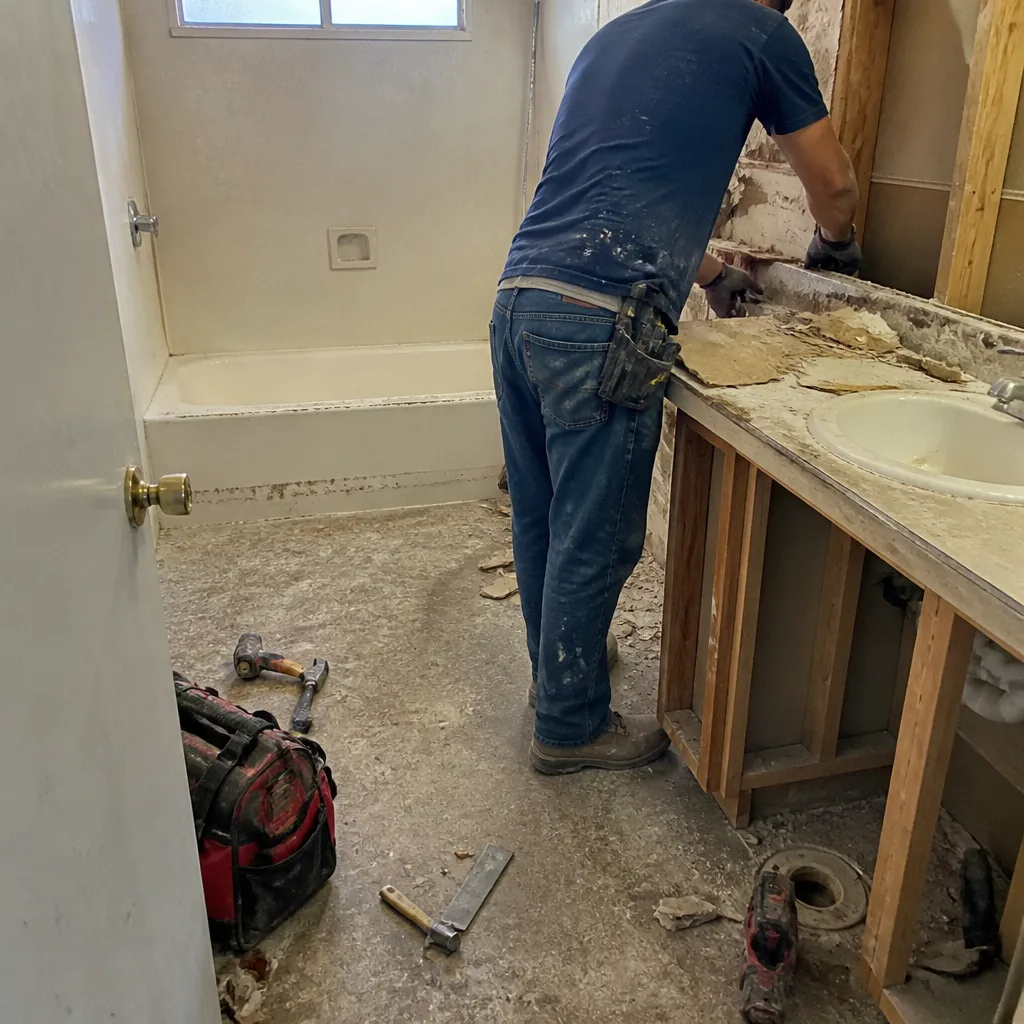 Before
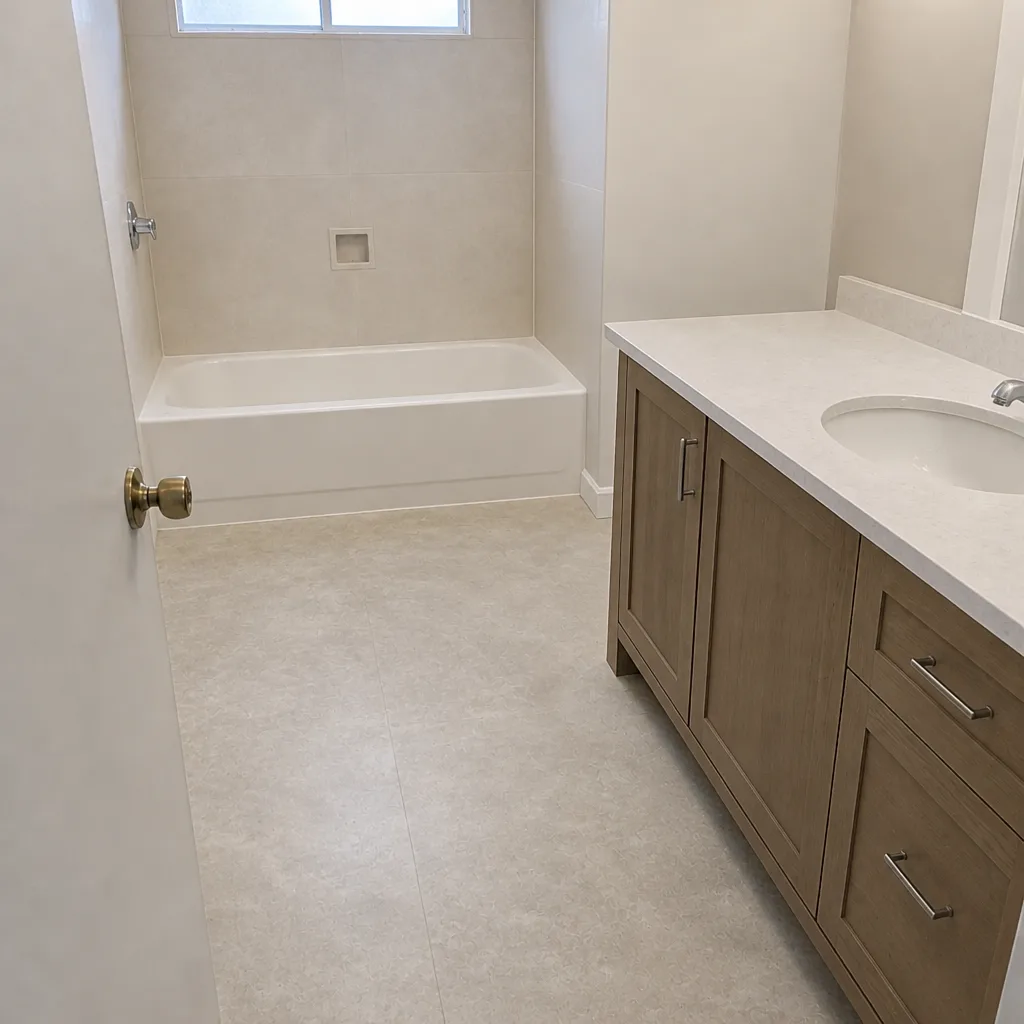 After
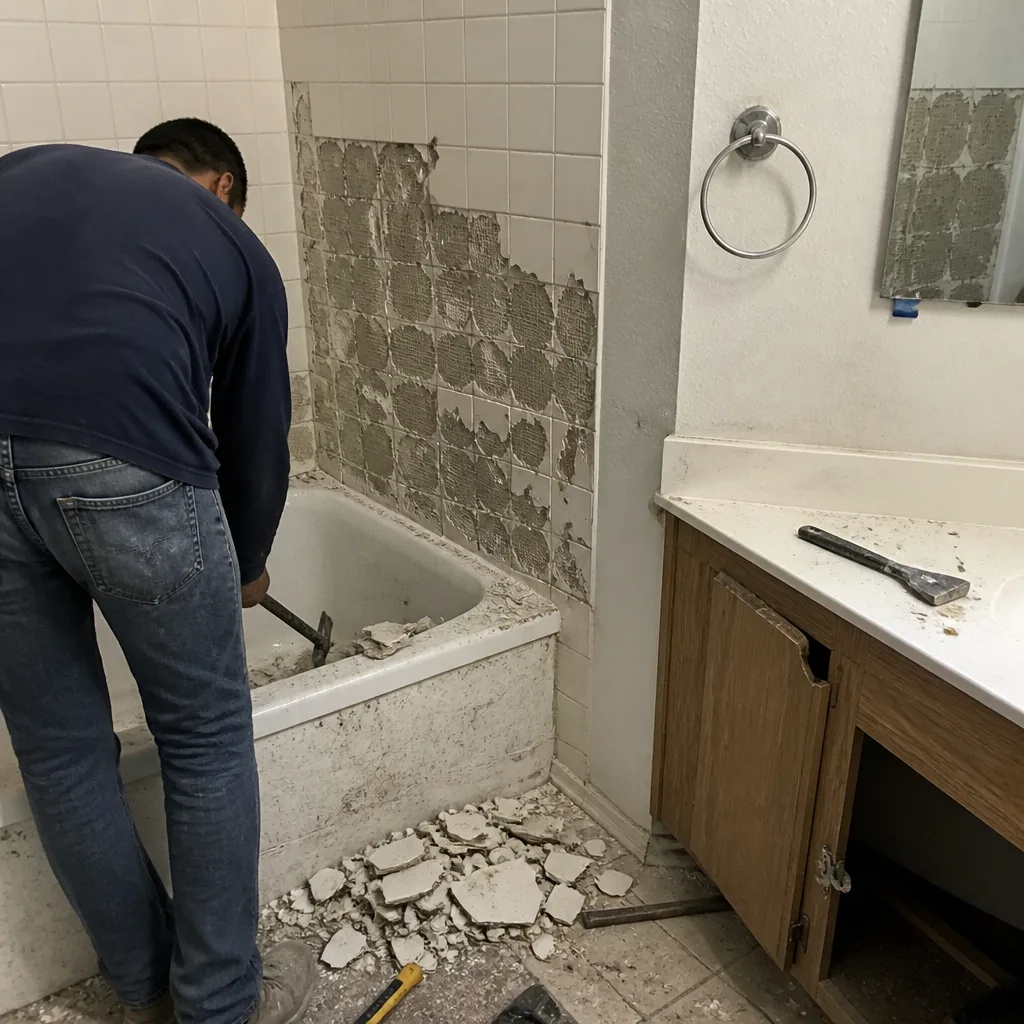 Before
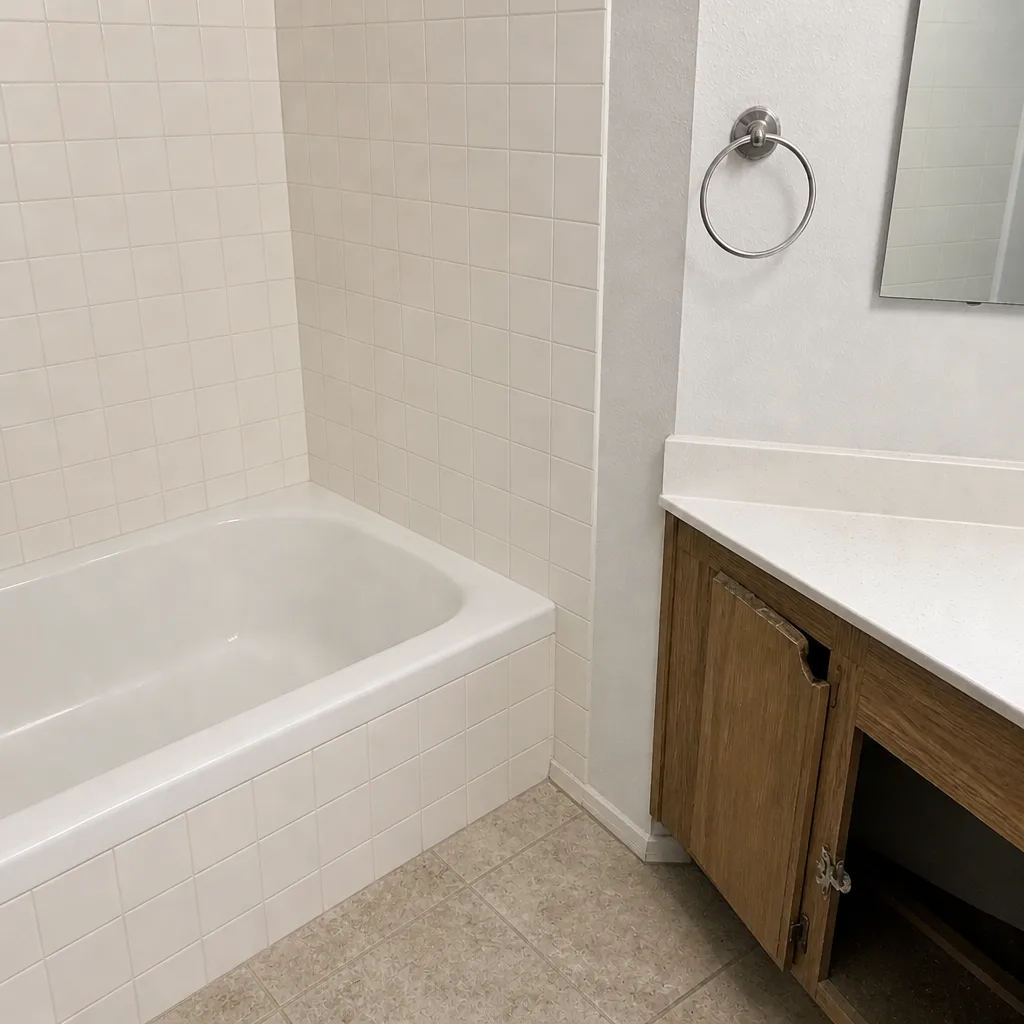 After
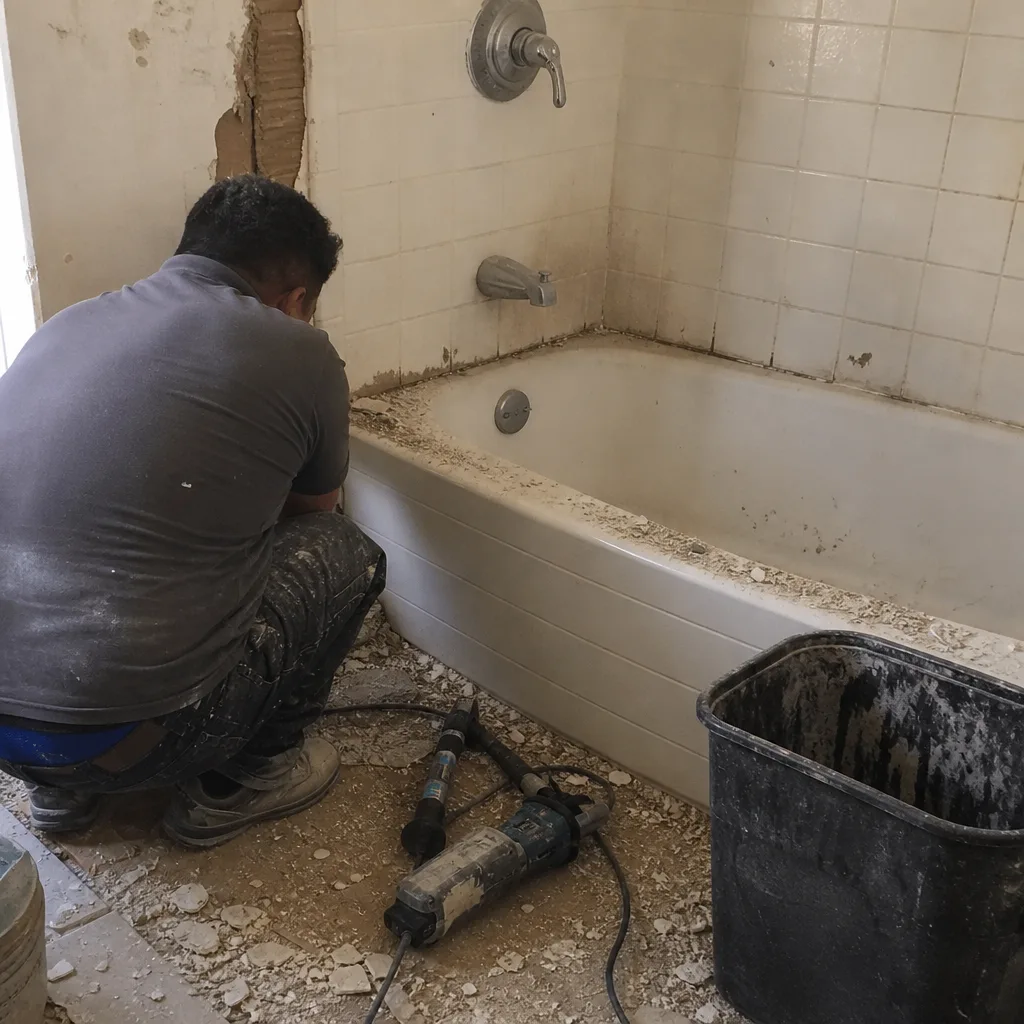 Before
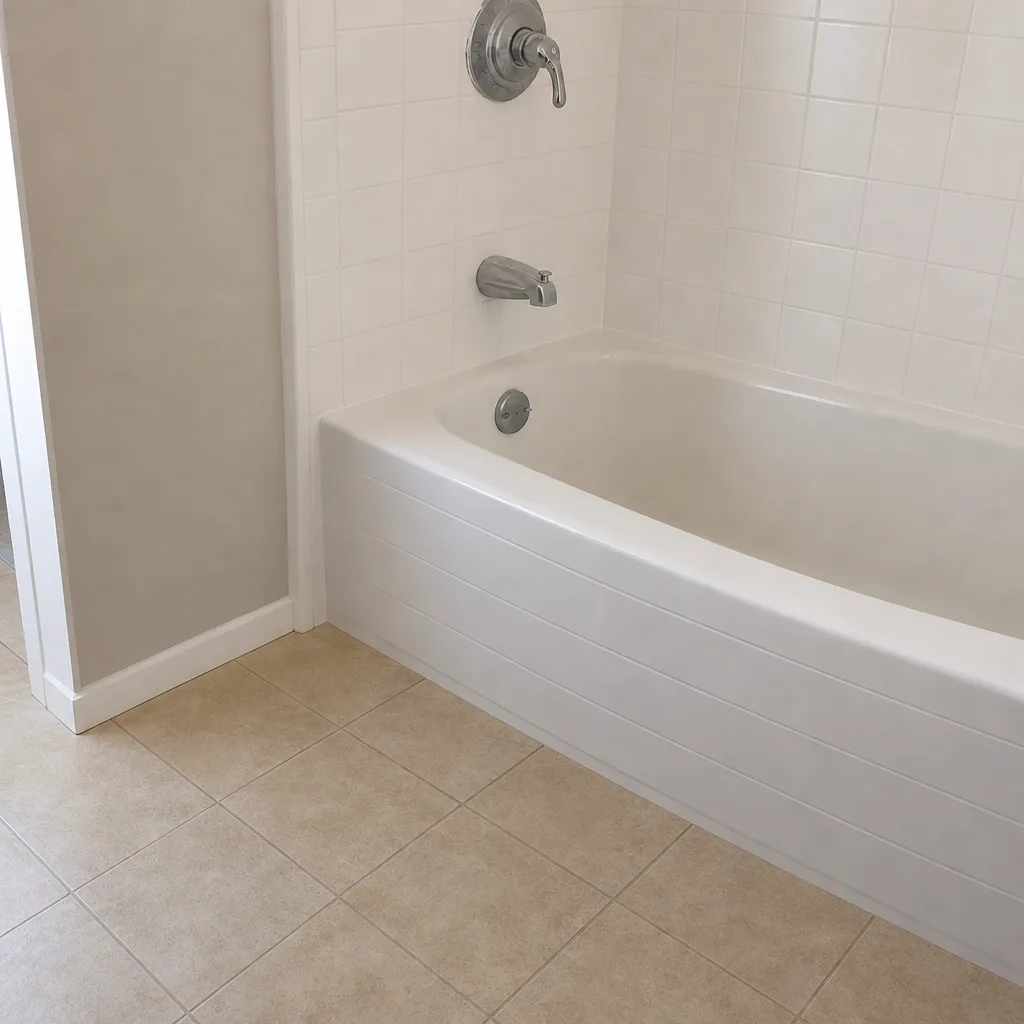 After
When to Call a Professional
Call a professional when water is actively moving and you can’t stop it at the main valve, when water reached wiring, outlets, or the electrical panel, or when drywall or framing has been wet for more than 24 hours without a moisture reading confirming it’s dry. Call before demolition if you don’t know where the main shutoff is, if the valve won’t close, or if the supply lines are old and you’re about to open the walls. Call if your policy questions are unresolved and you want to protect the remodel before it starts, not after a failure.
Dayspring Bath Remodeling offers free estimates in Las Vegas – call (888) 393-8208. We answer 24/7. Fast dispatch from 7am to 7pm, Sunday through Friday. The estimate is free and the written estimate sets the price.
Frequently Asked Questions
Remediation costs depend on how much water reached the walls, whether electrical was involved, and what has to be removed and rebuilt. We can’t quote a remediation over the phone, and we won’t guess. For the remodeling scope that follows, the estimate is free and the price is set per job by the written estimate. Call (888) 393-8208 to get a real number on the project itself.
Most policies cover sudden, accidental water damage, not damage from faulty workmanship or long-term leakage, and coverage details during construction phases vary by policy. Read your own policy and call your insurer before demolition to confirm what applies. We recommend taking photos before work starts and keeping the contractor agreement and insurance certificate on file.
Most Las Vegas homes have the main shutoff where the water line enters the house, which is commonly in the garage, a utility closet, or an exterior wall box near the front or side yard. Many bathrooms also have local isolation valves under the sink or in the wall behind the toilet. Test the main valve before a remodel begins, and tag it so anyone can find it in seconds.
Mold can begin in wet building materials within 24 to 48 hours, and drywall and framing lose structural integrity much sooner if the water source isn’t stopped. In Las Vegas, the low humidity helps surfaces dry on the outside, but moisture trapped inside walls still needs to be measured and dried. Shut off water first, document second, and get a moisture reading before any demo or rebuild resumes.
Replace old supply lines, angle stops, and the shower valve body early in the project before walls close. It’s one of the cheapest parts of the budget and one of the highest-value risk reductions. Pressure-test before the walls go back up. If you’re unsure what your plumbing needs, a free estimate will tell you. Call (888) 393-8208.
Close off the work zone, cover exterior openings with taped plastic sheeting, protect drains with filter caps, and call your remodeler to inspect the work zone before work resumes. Do not let a wet open bathroom sit unexamined. If water reached exposed subfloor or framing, get a moisture reading. In Las Vegas, monsoon rainfall can be intense and brief, so a quick response protects the project. Need a second opinion? Call (888) 393-8208.
The Bottom Line
A remodel-in-progress is the most vulnerable version of your bathroom. The protections that matter most happen before demolition: a tested main shutoff, early supply line replacement, a storm plan for open walls, and documented photos and contractor paperwork. During an event, shut off the water first and document second. Afterward, measure moisture instead of trusting your hand. Las Vegas’s rare but intense storms and dry interior climate each present specific risks, and a prepared homeowner handles both without losing the work. When you’re ready for a specialist’s eye on the project, call (888) 393-8208 for a free estimate.
Written by the team at Dayspring Bath Remodeling.